

Artistic Empathy
Investigating "the real world"

Anyone who’s ever studied history, philosophy, literature or numerous other topics in the humanities has had it happen to them: you’re at a party, or family gathering, or maybe having a meal with your prospective in-laws, and suddenly someone turns to you and says probingly, “What you’re doing seems all very interesting, but when are you going to turn your attention to the real world?”
This notion of an all-important “real world” distinct from abstruse scholarly inclinations has long confused me, given that it’s near-universally acknowledged that the most influential humans in history include people like Thucydides, Plato, Shakespeare and Machiavelli. But somehow, if you spend your days carefully poring over the words of these overwhelmingly impactful people, you’re wilfully removing yourself from “the real world”.1
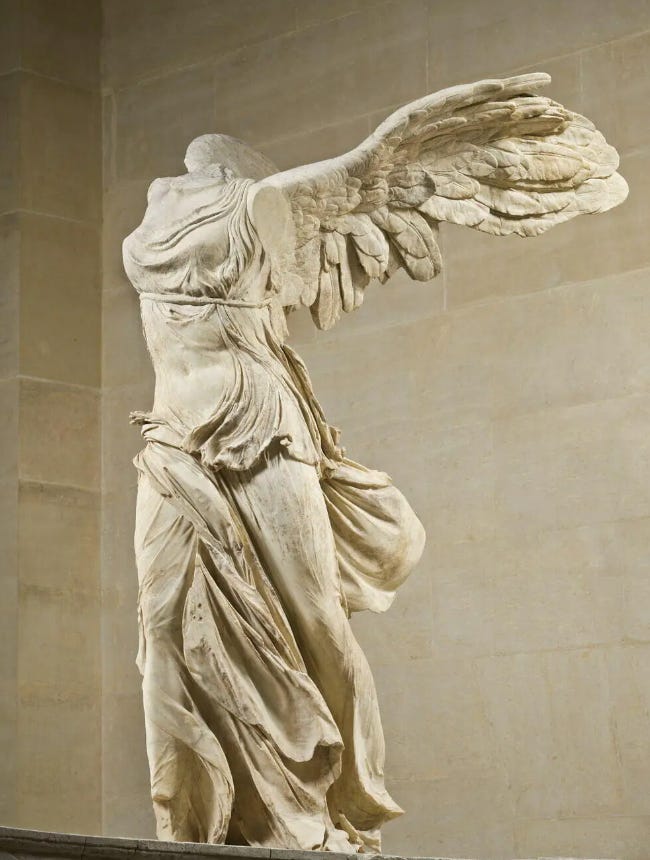
A large part of the problem, I think, is what the insightful British historian David Cannadine once described to me as ‘our contemporary geographical and temporal parochialism’: the unthinking conviction that the only time and place worth paying attention to is the here and now – a parochialism, he maintained, that the historical enterprise is ideally suited to combat, by forcing us to “get ourselves outside of ourselves”.
In other words, it’s not just – as defenders of the humanities are so apt to invoke in our hyper-parochial age – that examining past people and societies will help us better appreciate “where we came from” (although that too, of course). It’s that those who lived in other times and places are often very much worth paying attention to in their own right, simply because they created remarkable things, both physical and abstract.2
I inevitably found myself thinking about all of this during my recent discussion with Princeton University’s charismatic architectural historian Sam Holzman, a veritable one man wrecking crew of the standard “musty irrelevant academic” stereotype that all those “real-world” advocates constantly trot out. Because it’s not just Sam’s inspiring combination of irrepressible dynamism and rigorous scholarship,3 it’s his constant determination to place himself in the world of those exceptional craftsmen, whose primary distinguishing feature is that they happen to have lived thousands of years ago.
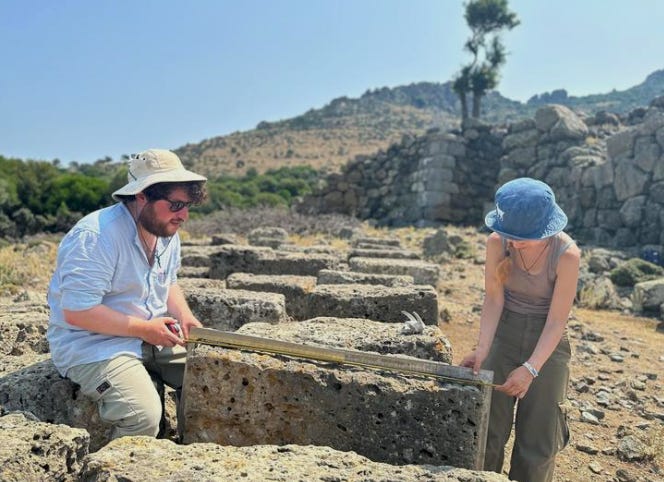
Which goes a considerable distance towards explaining why a scholar of ancient Greek architecture like Sam would decide to take the time and effort to learn how to carve stone himself:4
“I was about halfway through my dissertation, writing about stuff carved out of marble, and I thought, ‘You know, I’m writing about something I’ve not tried, and I really ought to do that.’ Through my work as a volunteer with the Parthenon Restoration Service I got to know some of the marble carvers who work there, and I started to sort of shadow them before ultimately doing some of my own carving.
“When you start learning how to do stone carving, you discover as you are hammering across the veins that they have different hardnesses: you can feel it like you’re going over speed bumps as you chisel across those things that look like they’re just different colours. They have a slight difference in geochemistry to them and you feel it with your chisel.

“You discover so many things from doing this. I didn’t even think about the fact that different kinds of stone have a smell, because some kinds of marble and limestone have sulfur in them, and you smell that immediately. There are all kinds of aspects to this that you just don’t think about when you are just looking at the finished product – things like the veins in the stone, how far you can push it to make a span, an intuition about where something’s going to crack and how to take preventative measures.”
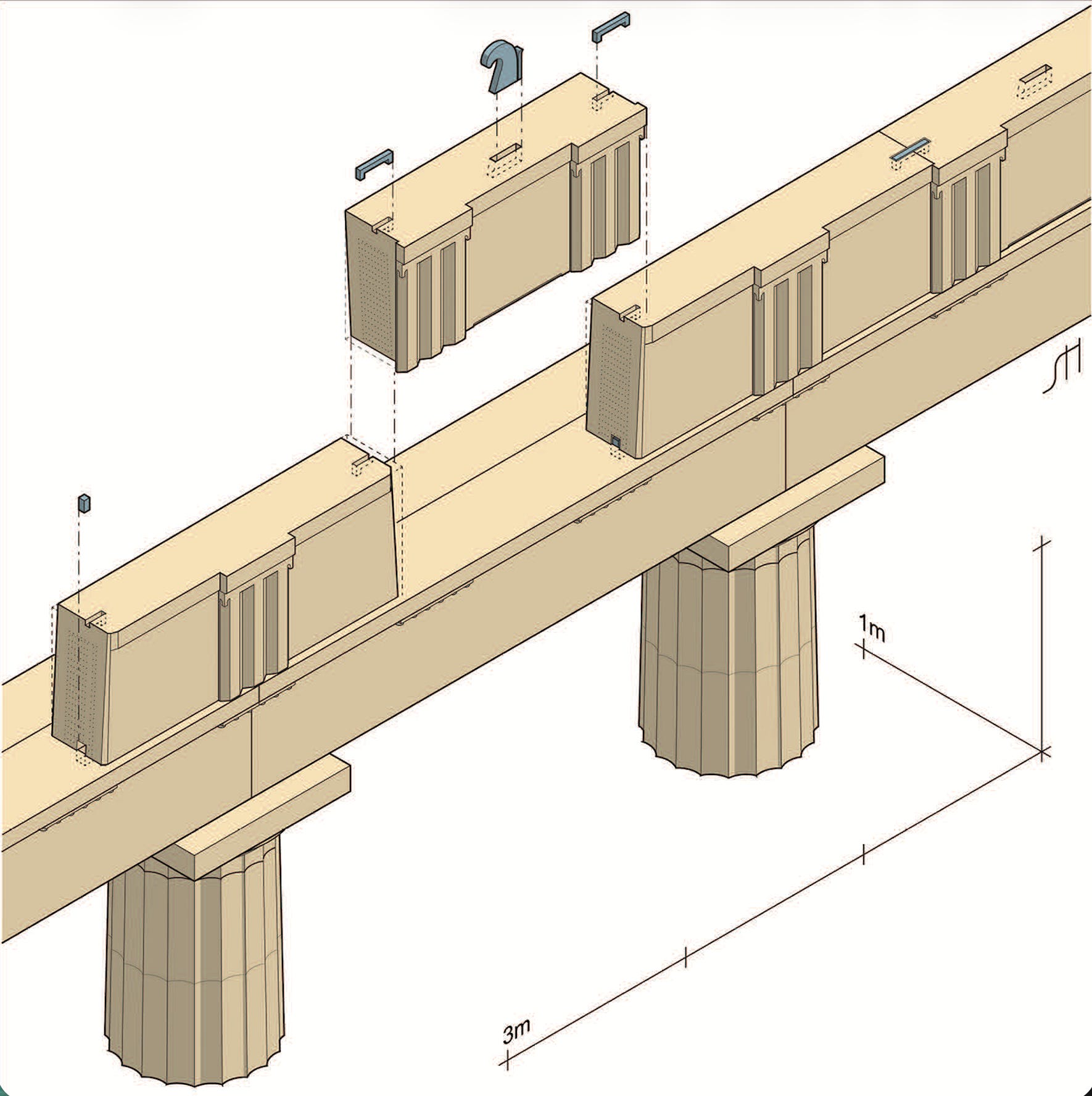
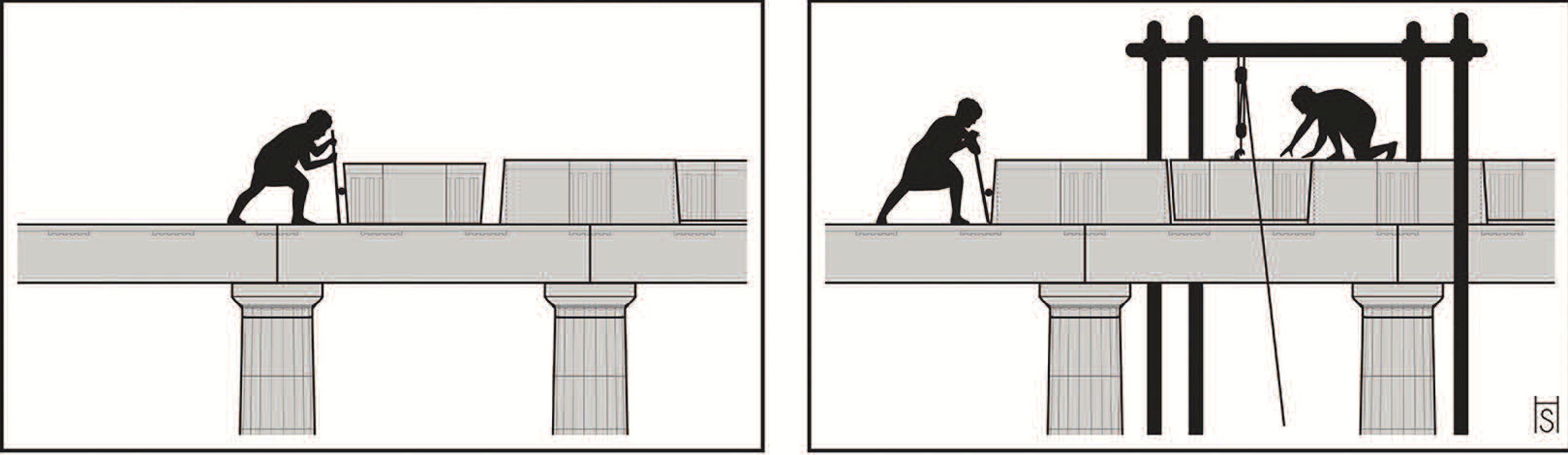
The concrete research impact of Sam’s decidedly hands-on, empathetic approach is not difficult to spot, yielding a range of penetrating insights: from the stylistic motivations of ancient capital designers to discovering an ancient Greek instance of flat-arch construction that was long thought to have been invented several centuries later by the Romans.
And then there was the curious case of a little dolphin clamp:
“I was in Romania at the site of the ancient Greek city of Istrus, at what was once the mouth of the Danube river. There’s a beautiful Ionic column capital that cracked right down the middle, and they repaired it with a giant clamp, like a huge iron staple in the two halves to hold it back together again, and then they put a cosmetic patch over it, and it’s in the shape of a dolphin.
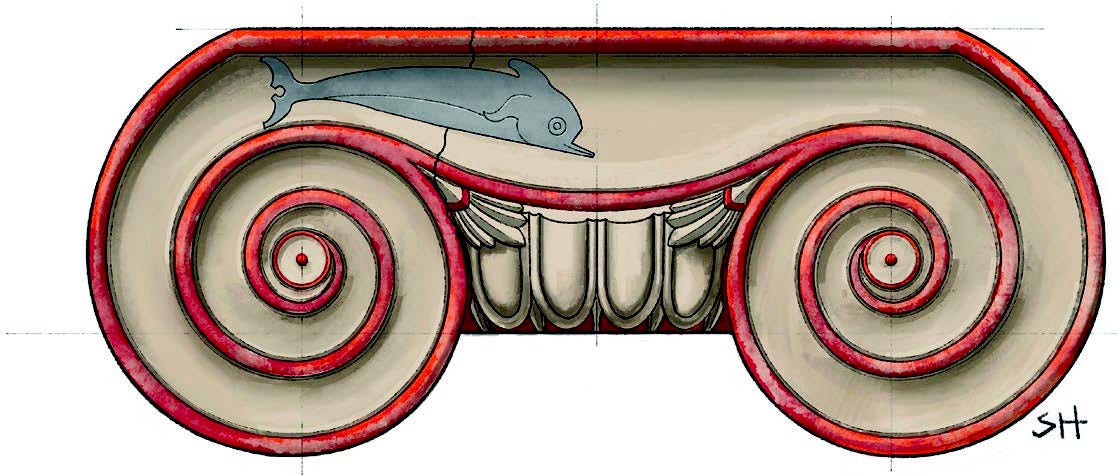
“I thought to myself, ‘Wait a minute, that’s not how these things are supposed to work.’ To my mind, there’s nothing else that looks like this, but it’s an invitation for us as art historians, as scholars of antiquity, to think about how ancient craftspeople thought about these repairs a little bit differently: they were laying in value. If you couldn’t make something look completely invisible, why not make it look beautiful? And that’s what I think they did in this case.”
There’s a good chance that few of these insights would have occurred to Sam had he not made the conscious effort to get into the hearts and minds of those remarkable ancient artisans through picking up a hammer and chisel himself – a decision which, intriguingly, naturally catapulted him into the realm of their contemporary counterparts:
“In my view there are actually two parts to the whole experience: one is trying it yourself, trying your hand at it. But the other part is talking to contemporary practitioners. I’ve had a lot of conversations with stone carvers who are active in Greece, and I’ve learned an enormous amount from them.”
I don’t know about you, but that sounds pretty “real world-like” to me. At least the only sort of world I’d like to live in.
Howard Burton
Below you can watch my recent conversation with Samuel Holtzman:
You can also watch the conversation on our Exploring Art History Spotify channel HERE.
It gets even sillier, of course, given that it’s not unusual for a cosmologist who spends her days developing models of the very early universe, to also be accused of ignoring “the real world”, thereby presenting us with a monumental semantic inversion of both “real” and “world”.
Relatedly, an important, and often overlooked, aspect of historical investigation is to uncover intriguing yet often ignored ideas and approaches, roads not travelled, that may nonetheless be very much worth pondering and even potentially resuscitating.
The older I get, the happier I feel when encountering dynamic young thinkers.