

Back To The Future
Talking about Islamic themes in Albrecht Dürer's prints

Fourteen years ago, when I started Ideas Roadshow, it was all about conversations: harnessing the affordances of the groundbreaking new digital media technology to capture a wide range of fascinating insights that otherwise would never make it out of their own deeply specialized academic silos.
At the time, the idea of holding unscripted filmed discussions was pretty unorthodox. What on earth, I was asked repeatedly, was I trying to do? Were these “interviews”? If so, why were the vast majority of my chosen interlocutors so resoundingly unfamous?And whoever heard of an interview lasting over two hours without any pre-set questions?
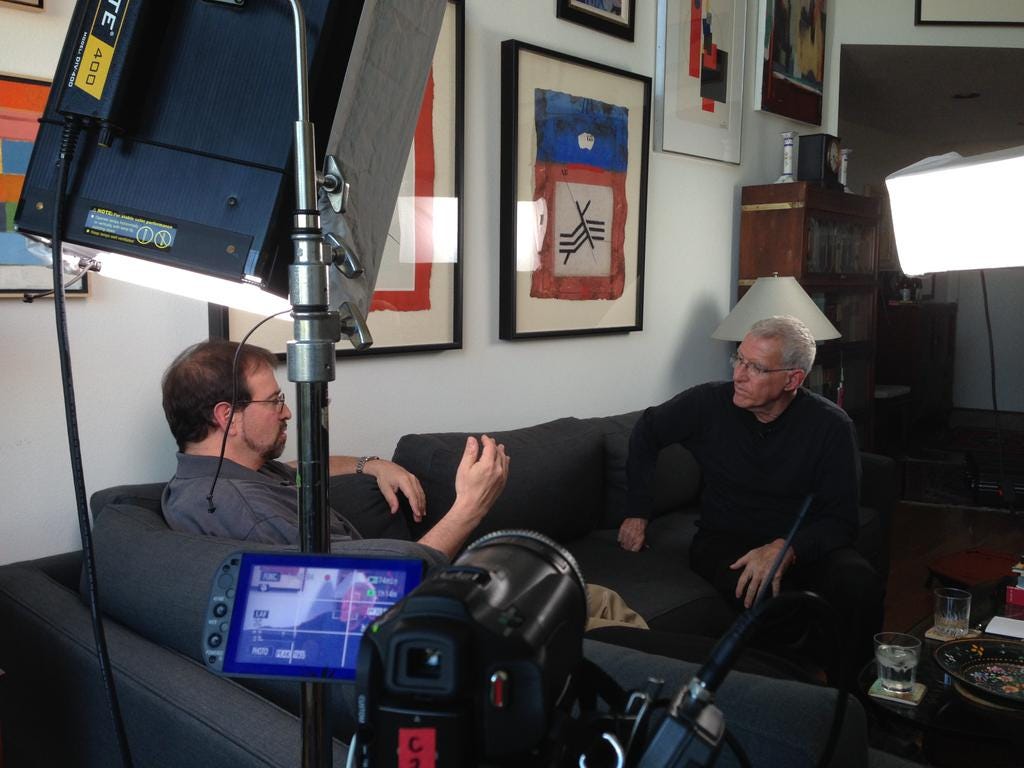
These days, when everyone and his brother seem determined to host their own long-format podcast, there’s widespread acceptance of the basic fact that informal conversations, properly done, can be stimulating, engaging and genuinely entertaining.
For my part, however, after producing more than 100 filmed conversations, I’ve long moved on from the conversational idiom and have somehow become, much to my amusement and astonishment, something of a documentary filmmaker: coming out with seven films over the last few years on a number of different topics, ranging from the recent pandemic to a deep dive into the cultural history of chess.
Recently, as loyal readers of this Exploring Art History substack will surely be aware, I’ve decided to focus my efforts on art history: a fascinating world of inspiring beauty, captivating mystery and seemingly unlimited intellectual stimulation, where I can blissfully escape from the omnipresent quotidian ugliness increasingly pressing in on all sides of us. In the last two years I’ve made four art films: a lengthy biography of Raphael, Raphael: A Portrait (2024), and three hour-long examinations of specific works of art: Botticelli’s Primavera, Raphael’s School of Athens and Sofonisba’s Chess Game (those three art films were released in 2025.
But not one filmed conversation.
In fact, despite the fact that the standard way to make art documentaries is to insert regular smatterings of “talking heads” proffering their personal opinions about the work or artist in question, I’ve consistently eschewed such an approach, which in my view significantly distracts from the vital task of building an overarching narrative to inform and engage the curious non-specialist.
It’s not that I’m opposed to incorporating expert insights, of course, but simply that I’ve long been convinced that the best way to do so when treating a complex topic is to carefully distill the vast array of often-conflicting professional writings. Art historians spend years of their life carefully writing their books and articles – subtle, precisely-argued works that generally offer an array of intriguing new interpretations and insights (otherwise, why bother?). And none of that naturally gets conveyed when we simply film them for a few seconds of soundbites.
So why bother doing it?
Well, I know the answer to that one, of course: because it’s easy. A tried and true formula for making an art documentary about a masterpiece made centuries ago is to simply intersperse film clips of a coterie of sententious experts with b-roll of various slow pans and detailed close-ups. Easy-peasy. But the motivated outsider is inevitably left pretty unsatisfied by the whole undeniably arbitrary experience: some say X, other say Y. Well, whatever.
Going beyond some simplistic collage of anodyne personal remarks is difficult. If you want to get a reasonably objective sense of the prevailing view of some art historical topic (and why), you have to sample a wide variety of professional opinions over a reasonably long time period. And doing that requires a great deal of time and effort, even for a specialist, let alone an outsider.
But sometimes we’re not all that interested in “the prevailing view”. Sometimes, the particular, the subjective, the deeply personal process of individual research and discovery is very much worth exploring. And when that’s on the agenda, the best way to do so, I’ve learned, is through a candid, free-flowing discussion with the investigator in question.
So, much to my surprise, I now find myself coming back (at least partly) to filmed conversations. This time they’re all filmed remotely, which is vastly more convenient (not to mention vastly less stressful, given the current enthusiasm for randomly incarcerating travellers at American ports of entry), and are all focused strongly on various aspects of art history. Moreover, ever the fashionable fellow, I’m determined to capitalize on the current video podcasting boom to ensure that our new Exploring Art History video podcast goes well beyond the standard “talking heads” format and features an enhanced visual component specifically designed to bring out the artistic concepts under discussion.
All our new Exploring Art History video podcasts will be released on Spotify and our new Exploring Art History YouTube channel (that will also feature an array of short art history films – stay tuned), as well as right here on this Exploring Art History substack (embedded through YouTube). Please do tell all your friends about it (and perhaps even your art historical enemies) - and of course if you have not subscribed yet, this would be the perfect time!
Our first podcast in this new series features a conversation with the eminently engaging Susan Dackerman about her recent book, Dürer’s Knots: Early European Print and the Islamic East (Princeton University Press, 2024), a beautifully designed monograph which offers compelling new interpretations of three “previously inscrutable” creations by the great Albrecht Dürer.
Susan’s careful multi-layered analysis, based on a detailed appreciation of the socio-cultural intricacies of Dürer’s world, swiftly convinced me that she’s developed an important new understanding of all three of these artworks. Maybe you’ll be convinced too.
You can watch the conversation below - please engage with the video by leaving a like or comment since this increases its visibility - enjoy and thanks in advance!
Howard Burton