

Taking Another Look
Embracing uncertainty

A perplexing issue faced by anyone who’s ever seriously studied anything is understanding when to question the expert consensus. It’s all very well to preach the merits of keeping an open mind, but if you’re new to a subject you naturally find yourself unreflectively imbibing most of what you learn from established sources.
It’s only after having attained a significant amount of knowledge that we find ourselves with sufficient confidence to turn our attention back to critically assessing some of those judgements previously taken for granted, but by then we typically don’t bother. Indeed, most of the time the thought of doing so never enters our head, as the initial interpretation has become so ingrained in our minds that we typically don’t even recognize it as an “interpretation” at all.
Of course, in the course of our educational journeys, we sometimes run into clear differences of opinions between domain specialists. When researching my detailed filmic biography of Raphael, for example, one particularly intense fault line I quickly ran into was the debate surrounding whether Raphael was, or wasn't, formally a student of Perugino,1 while my background reading on Botticelli's Primavera for our Renaissance Masterpieces film exploring that painting, presented me with a spectrum of views concerning the commissioning of the work: many believed that it was explicitly created as a wedding present for the 1477 marriage between Lorenzo di Pierfrancesco de' Medici and Semiramide Appiani, while almost as many others clung to – often equally vehemently – a number of entirely different theories.2
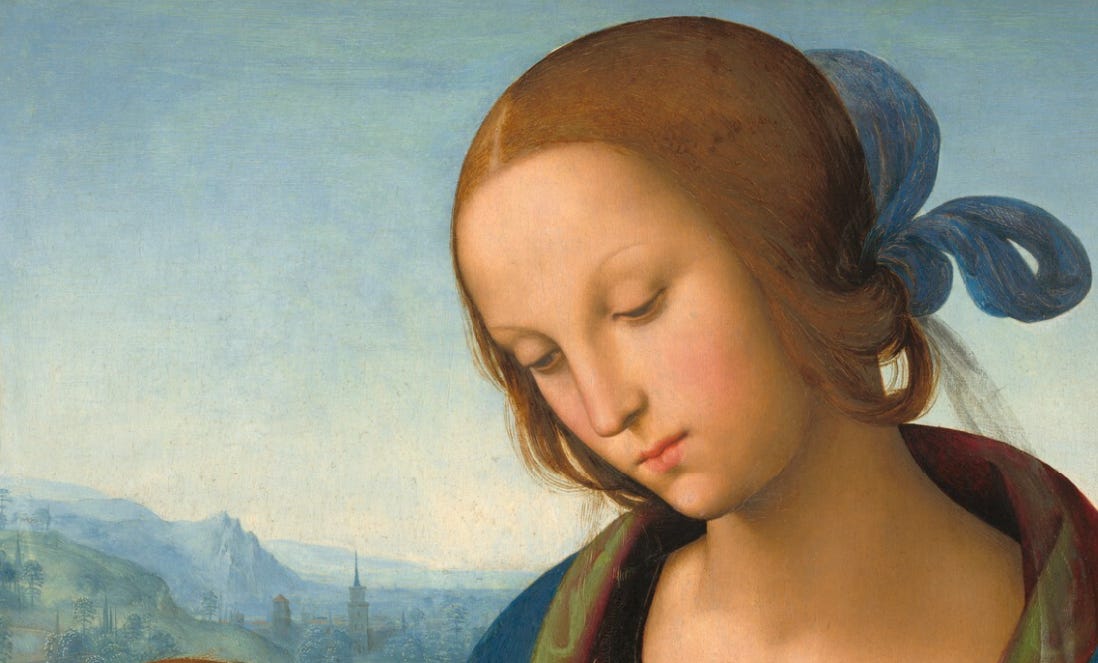
Such differences in expert perspectives can certainly be challenging to work through for an outsider like myself, but they have the distinct benefit of immediately imposing themselves on your consciousness and forcing you to find a way to deal with them – either plonking for a particular interpretation or, if you can’t bring yourself to come to one distinct conclusion, simply presenting the scholarly divergence as you find it: “Some people say X, others say Y”.
But by far the more challenging situation occurs when you later discover that you’ve unthinkingly swallowed a widely accepted view that might well turn out to be completely wrong.
This, too, I’ve experienced on several occasions.
While most seemed willing to blithely accept Vasari’s story that Raphael formally apprenticed with Perugino, almost everyone seemed equally straightforwardly determined to emphatically reject Vasari’s account of the underlying message of Raphael’s celebrated School of Athens, which he controversially describes as, “theologians reconciling philosophy and astrology with theology”.
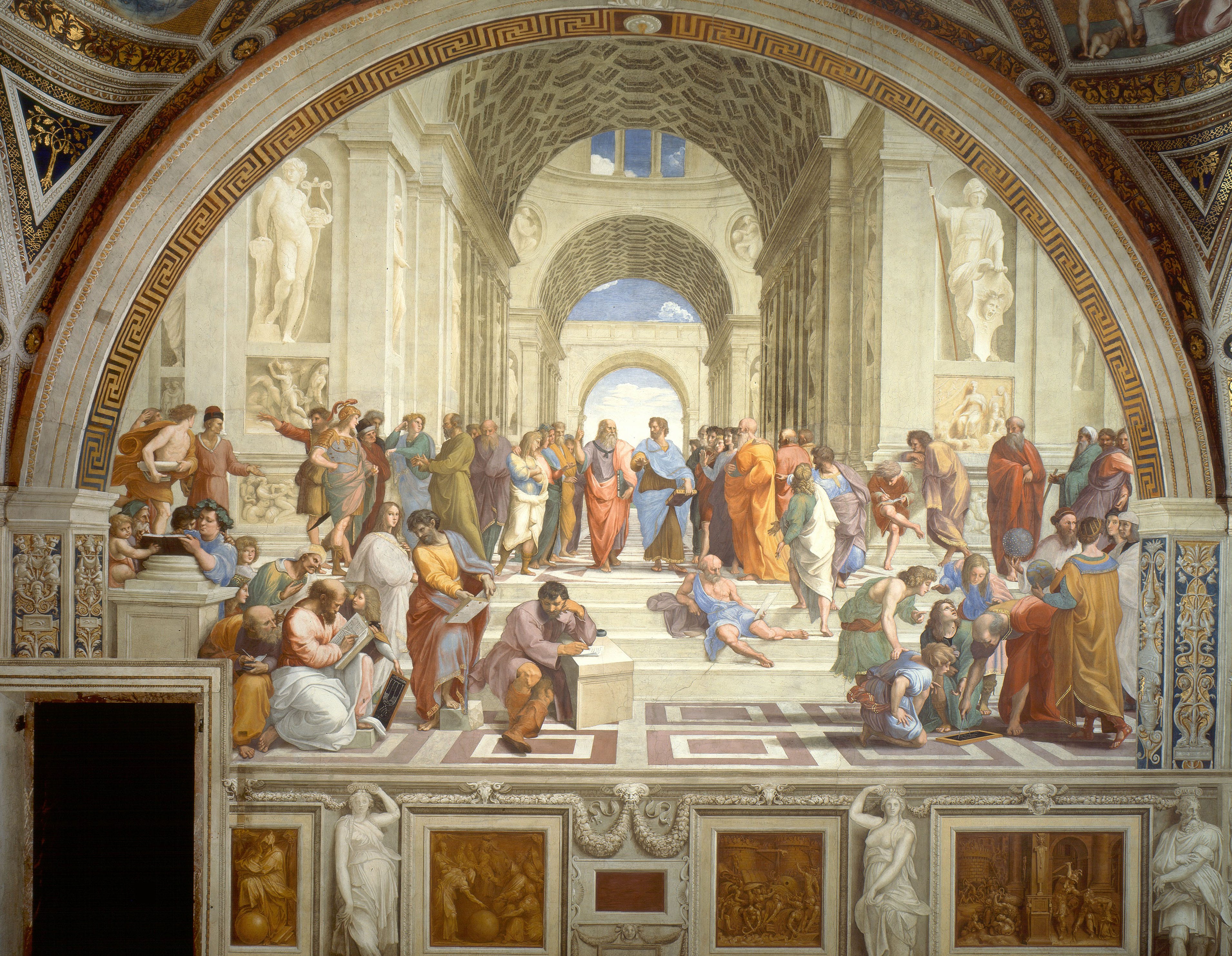
In fact, the scholarly consensus on Vasari being laughingly misguided on this point is so strong that in my first film on Raphael, I saw no reason to investigate the situation further and simply unreflectively parroted the “Vasari was completely out to lunch here” party line.
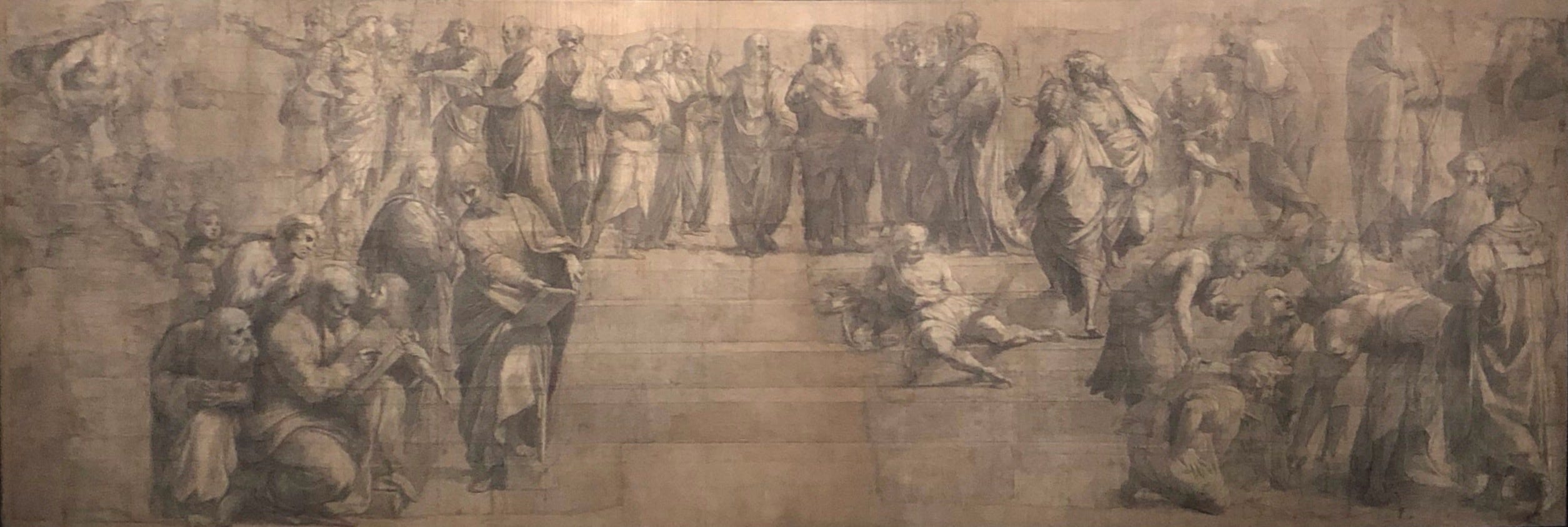
A year or so later, however, when researching the more focused Renaissance Masterpieces film on The School of Athens, I encountered a small number of sophisticated counter-arguments to this standard picture3 that I found, quite annoyingly, unable to entirely dismiss.4 In the end, I didn’t find myself 100% persuaded either way,5 but their well-articulated views had certainly sowed enough doubt in my mind to force me to publicly announce them as a distinct possibility in the new film, Raphael’s School of Athens (2025).6
More recently still, I’ve found myself forced to rethink yet another visual description I’ve uncritically swallowed, that of the identity of the sisterly protagonists in Sofonisba Anguissola’s Chess Game, the topic of our third Renaissance Masterpieces film.
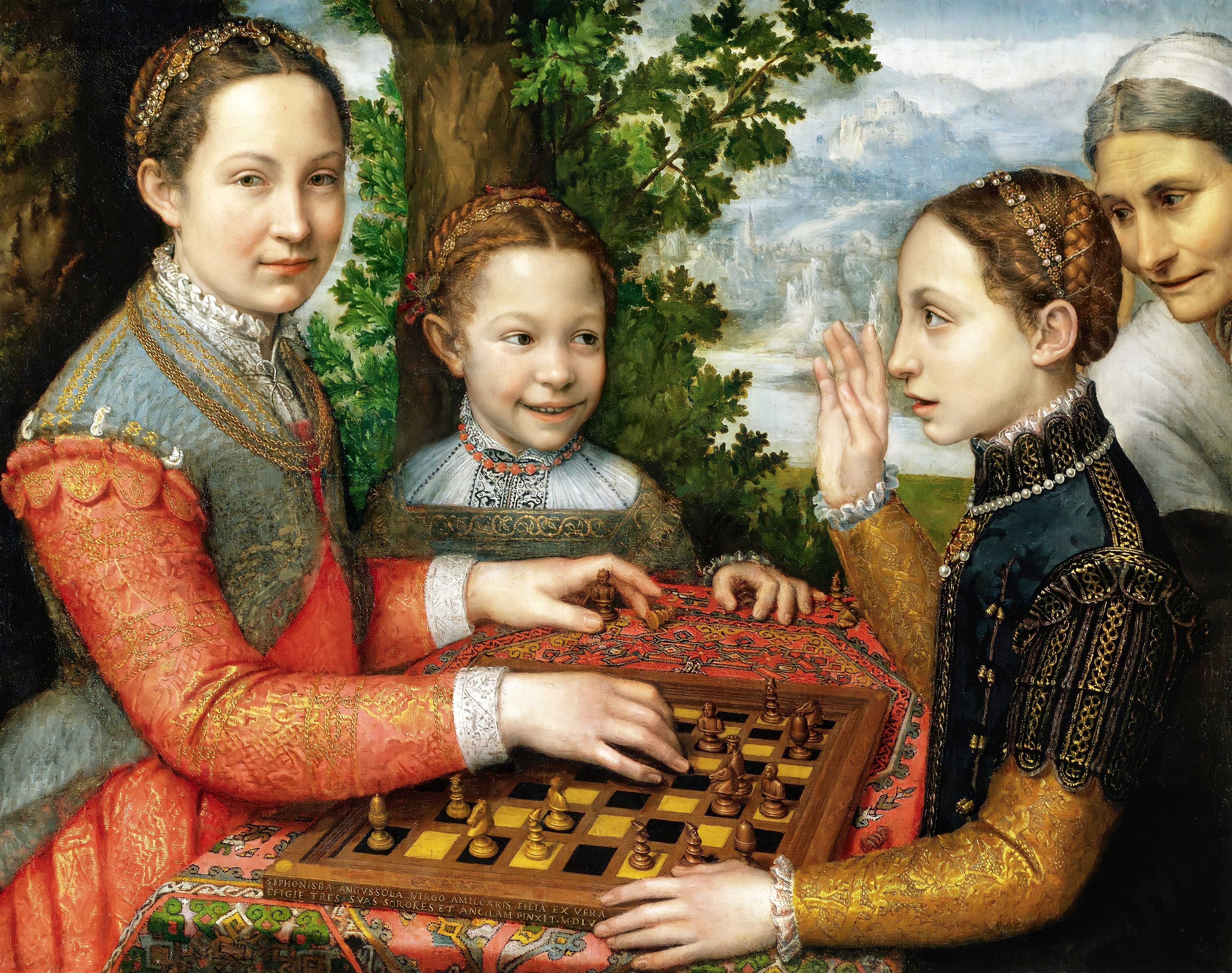
The standard account is that, along with the family maid on the right edge of the painting, the girls depicted are, from left to right, Lucia, Europa and Minerva, a correspondence which seems palpably reinforced by another painting by Sofonisba currently in the Milwaukee Art Museum: a girl similar to the right hand chess player in The Chess Game, who sports a medallion delineating attributes of the Greek goddess Athena, or Roman Minerva.
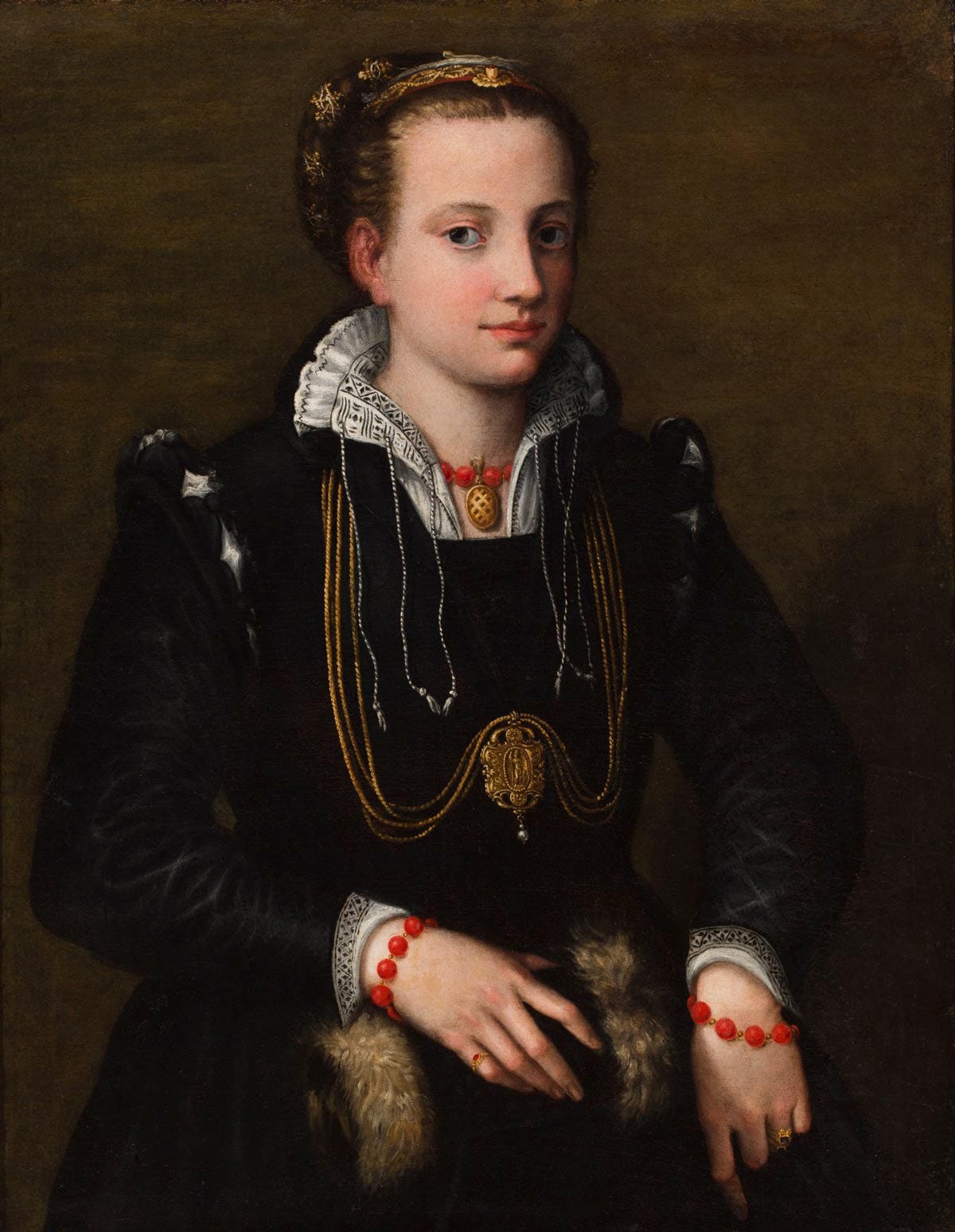
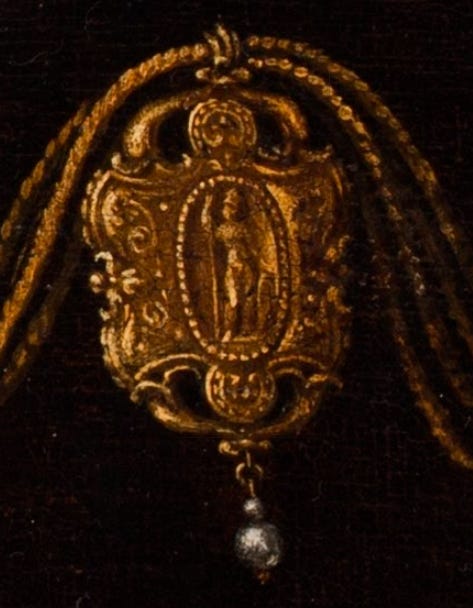
So what’s the problem?
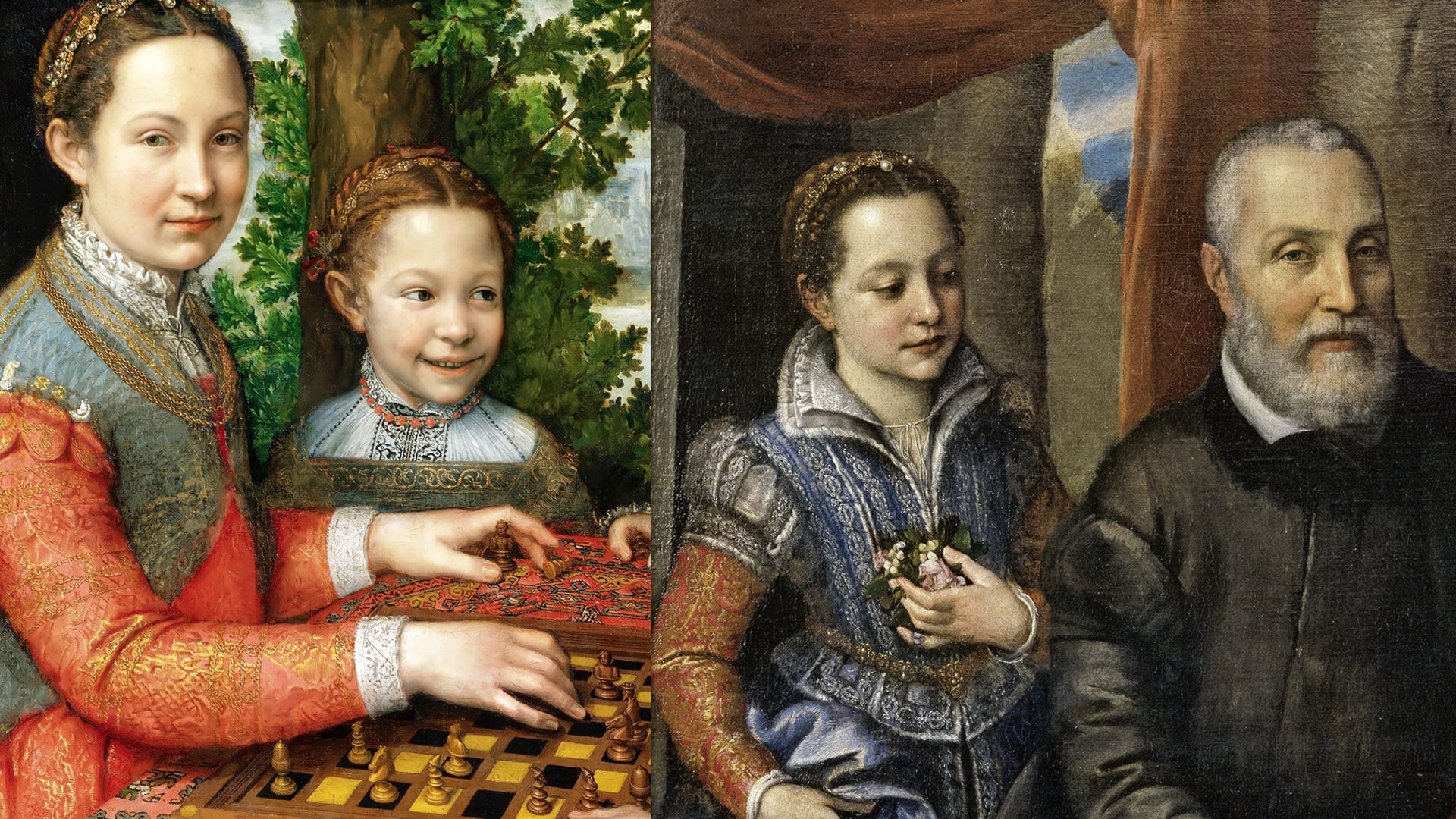
Well, as recently pointed out to me by the estimable art historian Michael Cole – whose recent book, Sofonisba’s Lesson, is by far the most comprehensive and penetrating account of Sofonisba scholarship to date – there’s another, highly relevant, family portrait by Sofonisba in Denmark’s Nivågård’s Malerisamling Museum that considerably muddies the waters, given that the girl in this painting looks very much like a slightly older version of the youngster gleefully surveying the scene in the The Chess Game.
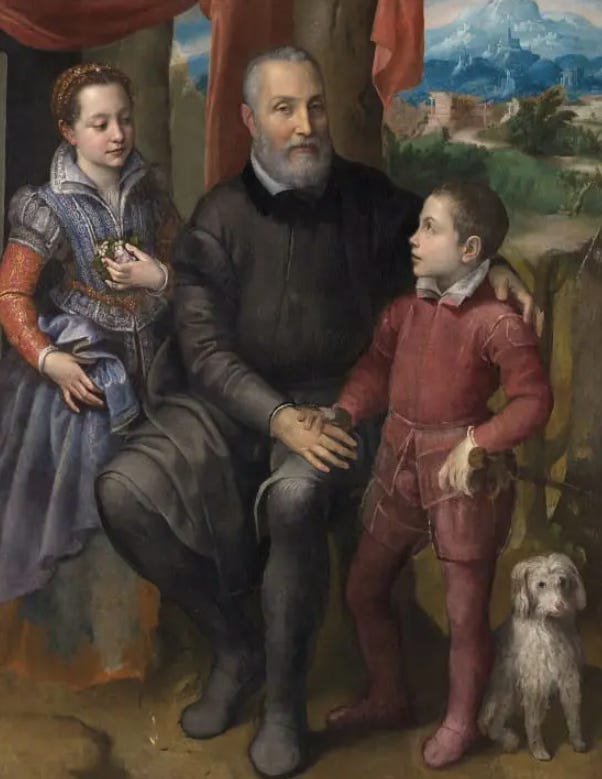
And this girl in the Niva portrait was explicitly described by none other than Giorgio Vasari (yet again!) as not Europa, but “Minerva, who was distinguished in painting and in letters”.
“Well,” you might reasonably conclude, “that untrustworthy Vasari must have simply goofed once more, this time cavalierly confusing the little Europa with her older sister Minerva.” But, as always, things turn out to be considerably more complicated than that.
In the first case, it’s worth emphasizing that Vasari wasn’t simply idly opining from on high somewhere: we know that he wrote his account after having made the effort to personally visit with Sofonisba’s father in the Anguissola family home in Cremona, where he gazed critically upon both The Chess Game and the Niva family portrait; so his words should carry considerable weight here.7
And then there’s the fact that, as Cole astutely points out, the extant documentary record provides no concrete proof whatsoever that Minerva was actually older than Europa at all; indeed, it seems that the primary basis for these convictions simply circles back to the sisterly attributions that we’ve long made to the figures in Sofonisba’s famous Chess Game. Meanwhile, several established scholars are on record as stating their conviction that it’s actually Minerva who’s the smiling youngster in the painting, in accordance with her visual resonance with the later portrait of her brother and father.
So it’s complicated.
Meanwhile, things might be even more complicated still, because it’s not just that all six of the Anguissola sisters8 bore a confusingly uncanny resemblance to each other, it’s also the case that, thanks to Sofonisba’s remarkable pedagogical efforts (a central point of Cole’s impressive monograph that I duly highlighted in our film), all of them somehow became accomplished artists in their own right. Which is to say that, not only are we far from certain which Anguissola sister is being depicted in the Milwaukee portrait, say, we’re equally unsure of who the actual painter was.9
The moral of the story?
If you want to learn about art, read as much as you can as carefully as possible, but always remember to keep both your mind and your eyes wide open.
Howard Burton
🎬 Please note that our recent Ideas Roadshow art films, Raphael: A Portrait, Botticelli’s Primavera and Sofonisba’s Chess Game, are available to watch for paid subscribers to Exploring Art History. 🎬 Visit HERE for a full overview.
Below is a selection of related essays that you might like to read:
Sofonisba's Chess Game - Premiere Part 1

Paid subscribers have access to an exclusive prerelease of our new film, Sofonisba’s Chess Game, while others will have an extended preview of the first four and a half minutes. Today we’ll release Part 1, while Parts 2, 3 and 4 will be released on the following three Fridays.
Sofonisba's Chess Game - Choosing Sofonisba (1/9)

This month we’ll be releasing Sofonisba’s Chess Game, the third film in our Renaissance Masterpieces Series following Botticelli’s Primavera and Raphael’s School of Athens. And you might well be wondering why I opted to engage in a rigorous examination of that particular painting.
Giorgio Vasari and Russell's Chicken

In his 1912 popular work The Problems of Philosophy, Bertrand Russell gave a famous example highlighting the potential shakiness of believing that just because something has happened in the past it will continue to happen in the future – a conviction he pointed out was not only universally adopted by humans, but also by members of other species:
Vasari explicitly claims (not entirely reasonably) that he was, but while the young Raphael was clearly hugely influenced by Perugino, there are some very good reasons to believe otherwise, such as Jill Dunkerton’s revealing research on the young Raphael’s painterly technique on his first recorded altarpiece, that revealed that it much more closely resembled that of his father than Perugino – a point that Kim Butler, among others, penetratingly laments in her article, “Rethinking Early Raphael” as being “not yet assimilated into the Raphael scholarship (see p. 82, footnote 36).
Of course, Primavera is a painting notoriously beset with legions of conflicting interpretations, and I never found one author with whom I wholly agreed – I found Charles Dempsey’s magisterial Portrayal of Love, for example, most compelling in a number of ways I went on to specifically highlighted in my film, Botticelli’s Primavera (2025), but there were also several parts of that book (including, as it happens, Dempsey’s account of the original commission) that I found decidedly less convincing.
“The Medieval Content of Raphael’s ‘School of Athens’” by Harry Gutman (1941) and “Raphael’s School of Athens: ‘Theologians Reconciling Philosophy and Astrology” by Mary Quinlan-McGrath (2016).
In particular, among other things, they build a compelling case for refuting the standard interpretation that Vasari was misled by erroneous prints of the fresco, instead placing those prints, and other works in a deeper, more revealing, historical context.
In particular, there are some significant issues with how to incorporate the absence of the Heraclitus/Michelangelo figure in the surviving original cartoon with their analysis.
Readers interested in more details are referred to my August 11, 2025 Substack post, Giorgio Vasari and Russell’s Chicken.
By the time he went to Cremona in the late 1550s, Sofonisba had left for Spain and both Lucia and Minerva had tragically died.
In addition to the aforementioned Sofonisba, Lucia, Minerva and Europa, there were two more: Elena and Anna Maria.
Previous opinions include, along with a Sofonisba portrait of Minerva, a Sofonisba self-portrait and a portrait of Minerva by Europa.
More lovely Sofonisba! Thank you.
This resonates. Even with an MA in Art History, I've spent years continuing to educate myself about women artists and the gaps in the stories I was taught. Art history isn't a collection of settled facts. It's an ongoing conversation, and some of the most meaningful discoveries come from revisiting assumptions we didn't even realize we were carrying.