

The Knowing Eye
Comprehending connoisseurship

One of the most captivating anecdotes from Giorgio Vasari’s compendious and hugely influential Vite is when Giulio Romano, who collaborated with Raphael on The Portrait of Leo X with Two Cardinals, incorrectly identified his own brushstrokes when shown Andrea del Sarto’s copy.
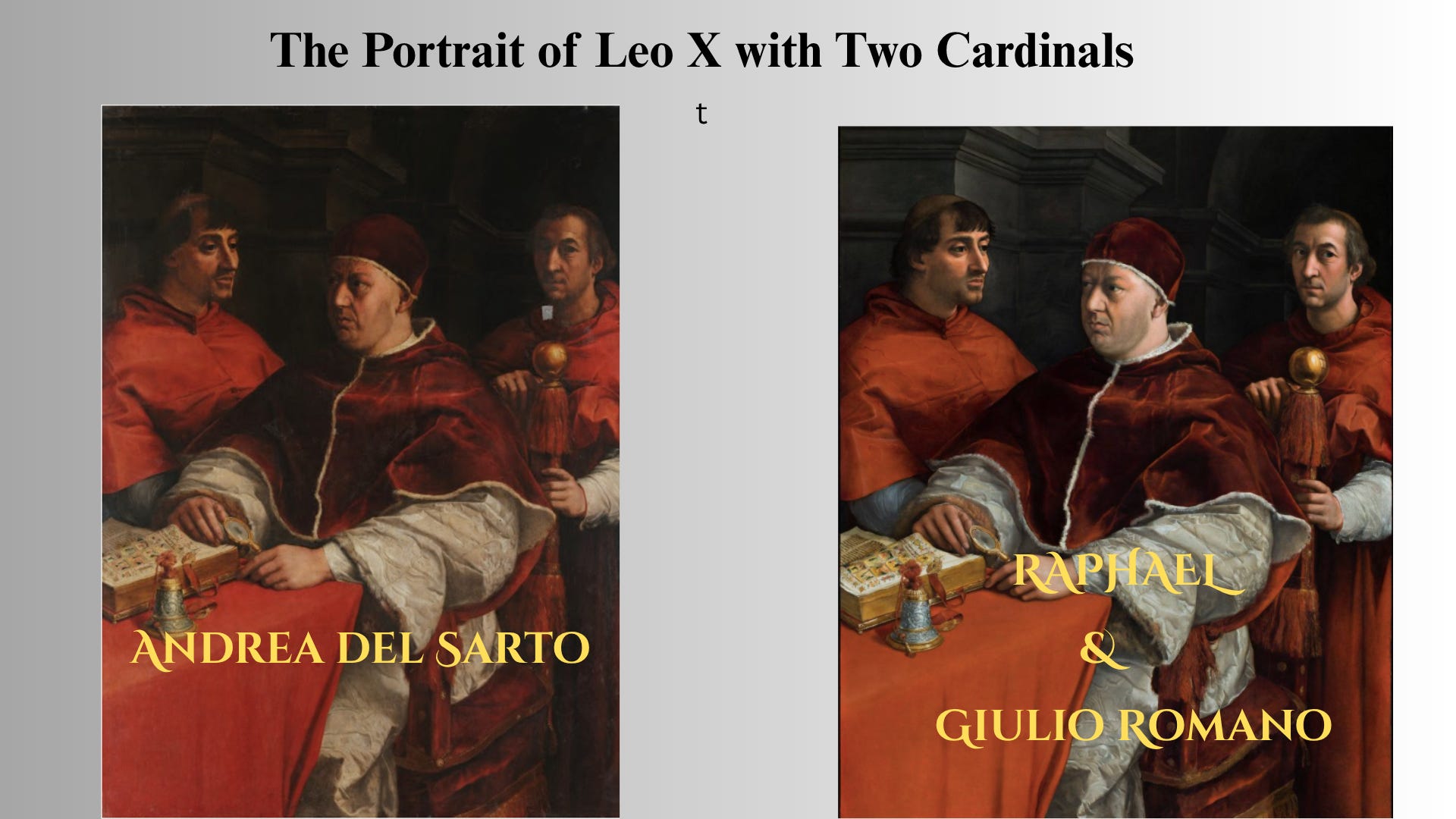
While Vasari’s motivation was to detail del Sarto’s remarkably accomplished painterly technique, the story equally serves another purpose: vividly illustrating how just how dauntingly difficult it can sometimes be to accurately determine who made what particular work of art.
Artistic connoisseurship has a long and fascinating history, as shown by Peter Burke in his recent book, The Connoisseur: A Cultural History.1 Ever since King Charles I playfully removed the labels of an incoming shipment of paintings to test the ability of his chief architect Inigo Jones to correctly identify the artists,2 the notion of some superhuman connoisseur with an unerring eye has firmly captured our collective imagination.
But what makes all of this particularly interesting, at least to me, is that such phenomenally acute art assessors have actually existed – never infallible, of course, but consistently exhibiting penetrating judgements that, more often than not, would be triumphantly verified years later through the discovery of corroborating historical documents or detailed scientific analysis (or both).
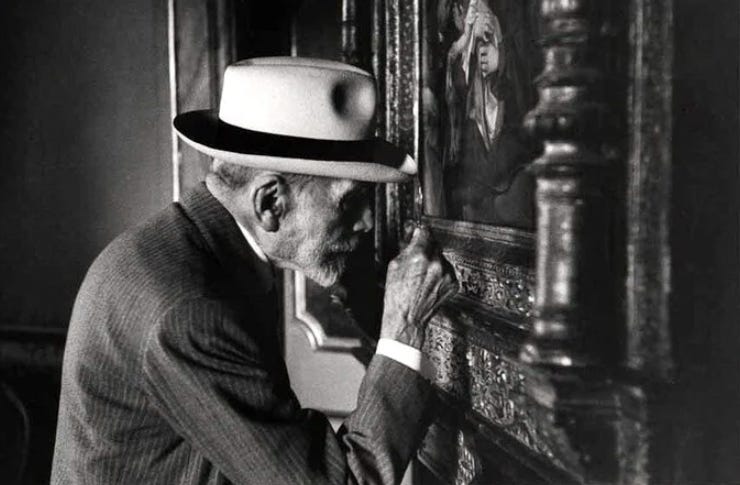
Indeed, the history of art has witnessed numerous examples of such illustrious savants, like Wilhelm Bode, Bernard Berenson, Roberto Longhi and Federico Zeri. That the majority of these superstar connoisseurs also made millions by publicly leveraging their diagnostic skills within a rapidly expanding art market, naturally increased their personal mystique along with their pocketbooks, but all of that is quite beside what is surely the most interesting question: How, on earth, did they do it?
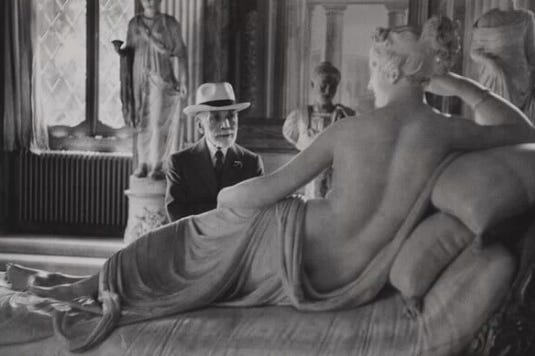
It’s far from obvious – particularly since connoisseurship has long shrouded itself in mystery, often deliberately so, with unhelpfully opaque words like “intuition” and “instinct” routinely invoked to justify all manner of aesthetic judgements.
Over the years, there have been occasional attempts to give the domain a more rigorously objective basis – most famously by the 19th-century anatomist and art theorist Giovanni Morelli, who pioneered a method for detecting the identity of artists by focusing on minor, usually anatomical, details of their figures (ears and thumbs in particular). But on the whole it’s safe to say that the art of connoisseurship has long eluded any formal scientific understanding of its operating methodology.
Why?
Well, first of all, as Burke duly points out, successful art connoisseurship requires a highly unique combination of skills: a practical knowledge of artistic techniques, a deep awareness of cultural context, and, likely most of all, a supremely developed, exceptionally capacious and continually-trained visual memory. All of that, and doubtless much more besides, goes into what is somewhat glibly referred to as “having a good eye”.
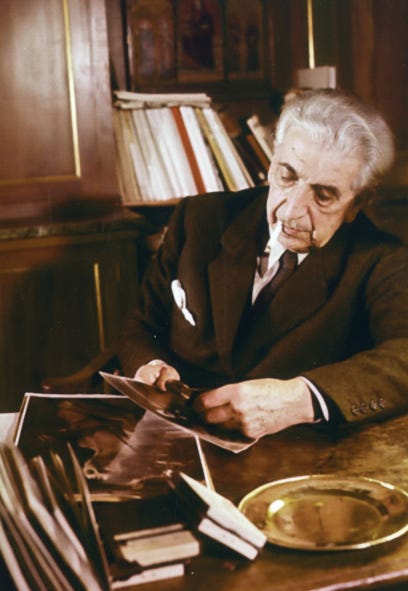
Such a complex web of human actions does not easily lend itself to rigorous scientific analysis; and it’s hard not to believe that most great connoisseurs, anxious to project the image of being possessed with a quasi-miraculous power of divination, were very happy to keep it that way.
Slowly but surely, however, science is getting the upper hand. Beginning with Alan Burroughs’ pioneering use of X-rays a little more than a century ago, a veritable barrage of hugely illuminating scientific methods have steadily intruded upon art scholarship, shedding incomparably valuable light on the nature of underdrawings, pentimenti, paint composition, brushwork techniques and much, much more.
And now, of course, there is AI.
Surely, you might well be thinking, this rapidly developing technology, with its world-beating capacity for pattern recognition, represents the death-blow for old-school human artistic connoisseurship.
Well, yes and no.
It’s unquestionably true that the days of scientifically illiterate connoisseurs are long behind us: all modern art historians intent on pushing the boundaries of our current understanding will henceforth have to familiarize themselves with AI models, just as they have with X-rays, infrared reflectography, gas chromatography-mass spectrometry and dozens of other analytical techniques that have entered the art-historical toolkit over the decades.
But it’s also very much worth emphasizing that every one of those sophisticated AI training models focused on detecting subtle aspects of an artist’s individual style is wholly dependent on the entire history of the past art-historical judgements that preceded it, just as any future breakthroughs in our understanding that come to light through newly discovered documentary sources or revised interpretations of technical analysis will also, necessarily, be fed right back into those evolving AI datasets.
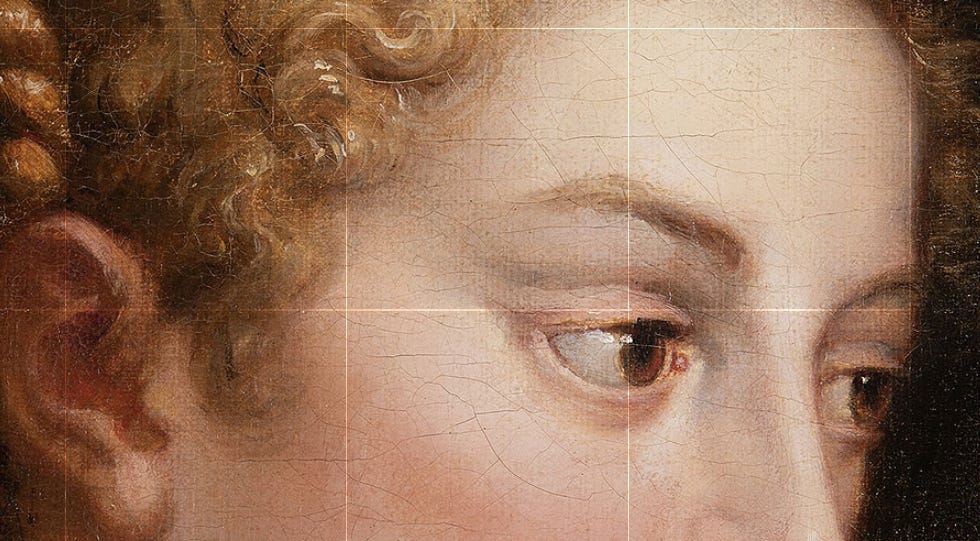
It is, in short, very much a two-way street; and anyone who thinks that the shiny black box of AI will magically churn out flawless artistic authentications completely independent of scholarly analysis is just as deluded as those who were convinced that charismatic connoisseurs of centuries past could never err.
Which brings me to a topic I often think about, but I almost never hear mentioned, locked in as we are to our media-driven oscillation between the two sensationalistic extremes of “AI will solve all our problems” and “AI will enslave humanity”: perhaps, through the advent of technologies like AI, we’re finally getting closer to appreciating how, exactly, great connoisseurs of the past like Bernard Berenson and Roberto Longhi were able to come up with their revelatory insights in the first place.
Maybe, in other words, it’s not so much about art at all. Maybe it’s more about understanding ourselves.
Howard Burton
- THE ART OF AI: A conversation with Carina Popovici -
Below you can watch my recent conversation with Carina Popovici, founder of Art Recognition, a global leader in AI art authentication. In this wide-ranging conversation Carina talks about how the very public art forgery scandal of Wolfgang Beltracchi, who spent years successfully passing off his paintings for lost creations of famous artists, pointed her towards a way to significantly improve artistic authentication practices by harnessing rapidly evolving AI technology in combination with cutting-edge art historical scholarship.
This podcast is also available on our Spotify channel HERE, while the audio version is available on the usual audio channels.
Reaktion, June 2026.
Jones claimed that he got them all right, but we have no other witness testimony to corroborate his assertion..