
Sofonisba's Chess Game - Love, Decoded (3/9)
Monogrammatic declarations

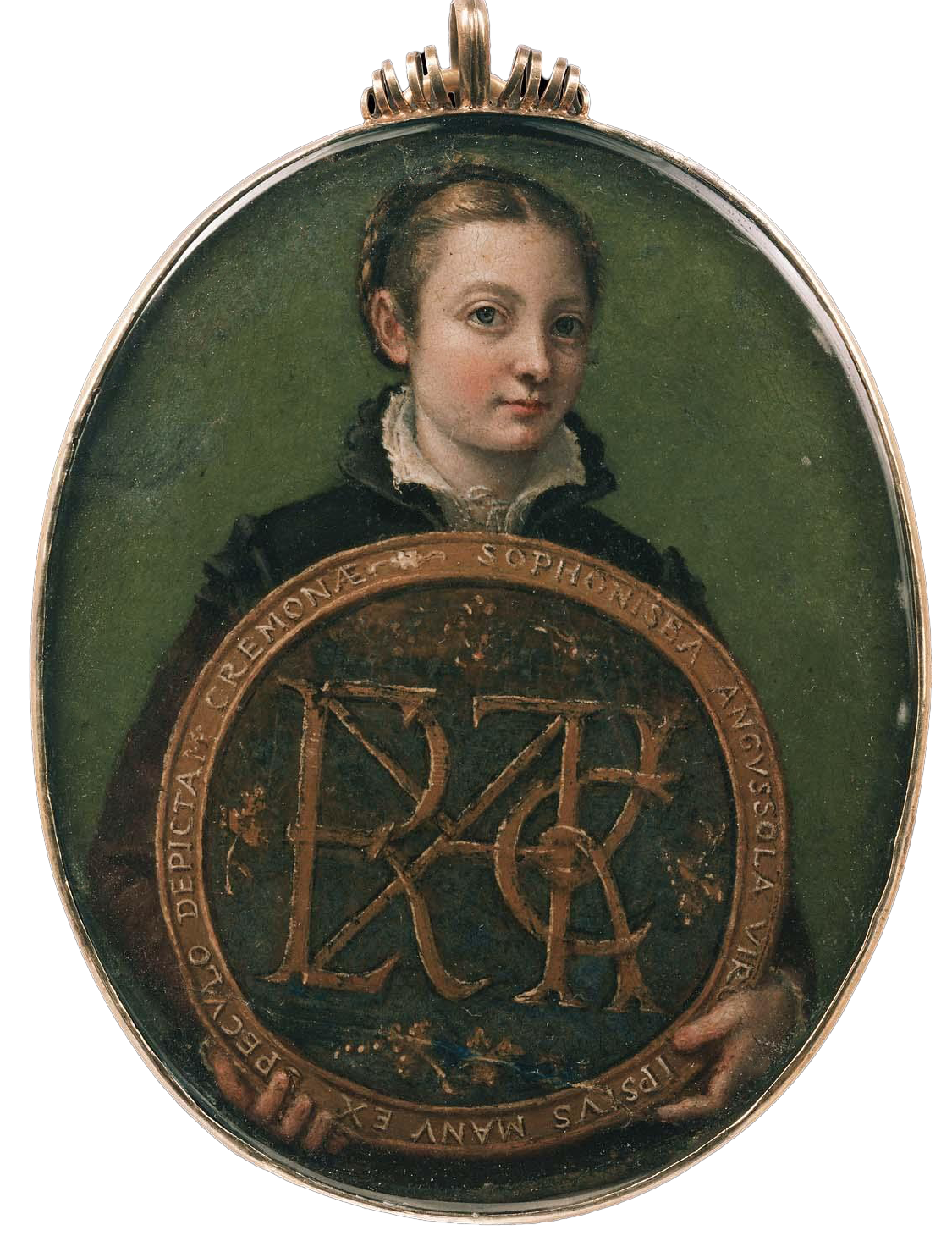
A great bonus of plunging into the captivating world of Renaissance art is that I’m frequently confronted with illuminating surprises. Like when I was thumbing through Michael Cole’s magisterial book on Sofonisba Anguissola, Sofonisba’s Lesson, and learned about Sofonisba’s remarkable self-portrait now in the Museum of Fine Arts (MFA) in Boston.
I had seen several pictures of it before, but since I had never seen it in person, it had somehow escaped my attention that it was actually tiny – a “miniature”, as it’s called – which, if anything, makes Sofonisba’s magnificent command of the details even more impressive.
I knew that miniatures were quite popular during the Renaissance, and that one of Sofonisba’s few successful women artist precursors, Levina Teerlinc (c. 1510–1576) was a famous miniaturist court painter to Henry VIII.
I knew, too, that Sofonisba painted a compelling portrait of the renowned miniaturist and manuscript illuminator Giulio Clovio (1498–1578)1, close friend to both El Greco and Pieter Bruegel the Elder, but somehow it had escaped my notice that Sofonisba had impressively mastered this most technically challenging domain as well.
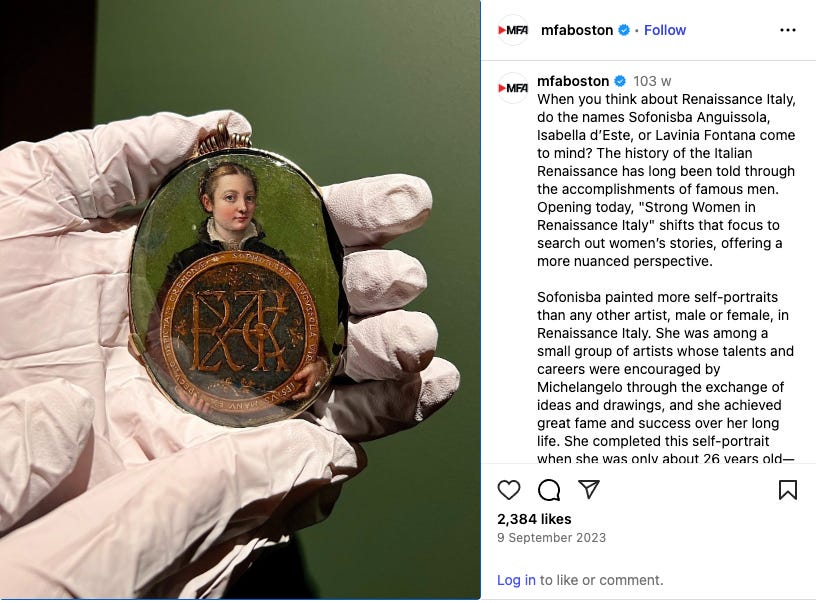
So just how small is Sofonisba’s MFA miniature self-portrait? Well, pretty darned small indeed, as can be seen by this photo from their instagram account promoting their 2023 show, Strong Women in Renaissance Italy.
But that was only the beginning of what this painting had to teach me.
Cole discusses it in detail on p. 35 of his book2 under the heading “Cypher”, which initially took me aback.
Oh wow! I thought to myself, Was Sofonisba a cryptographer too?3 Well, no. Cole was using the word “cypher” (a word I had always seen spelled “cipher”, as it happens) in a completely different way from the notion of “code” that it immediately brought to my mind.4
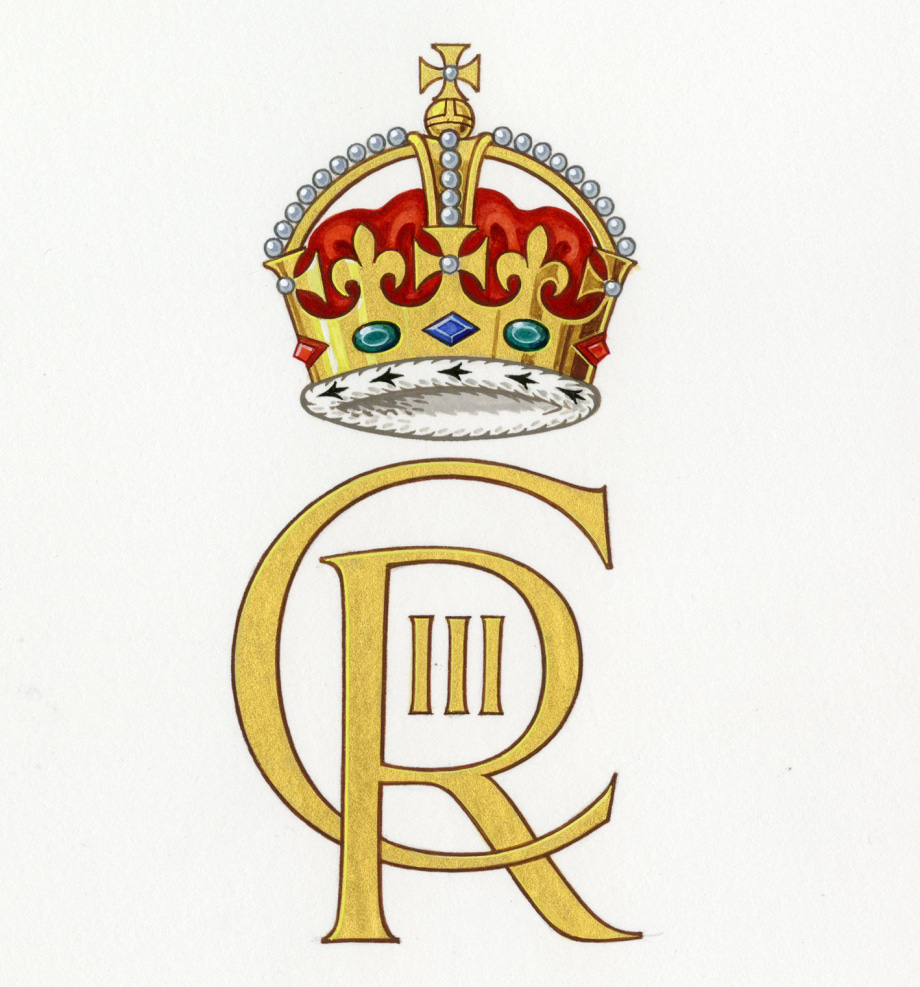
It turns out that the word “cipher” (or cypher) is also used in a profoundly opposite way to its vastly more common meaning: not as a secret form of writing meant to be impenetrable, but as a very public statement – a visual motif of two or more overlapping letters to designate ownership or association: a monogram, in other words.5 Below, for example, is the cypher of King Charles III.
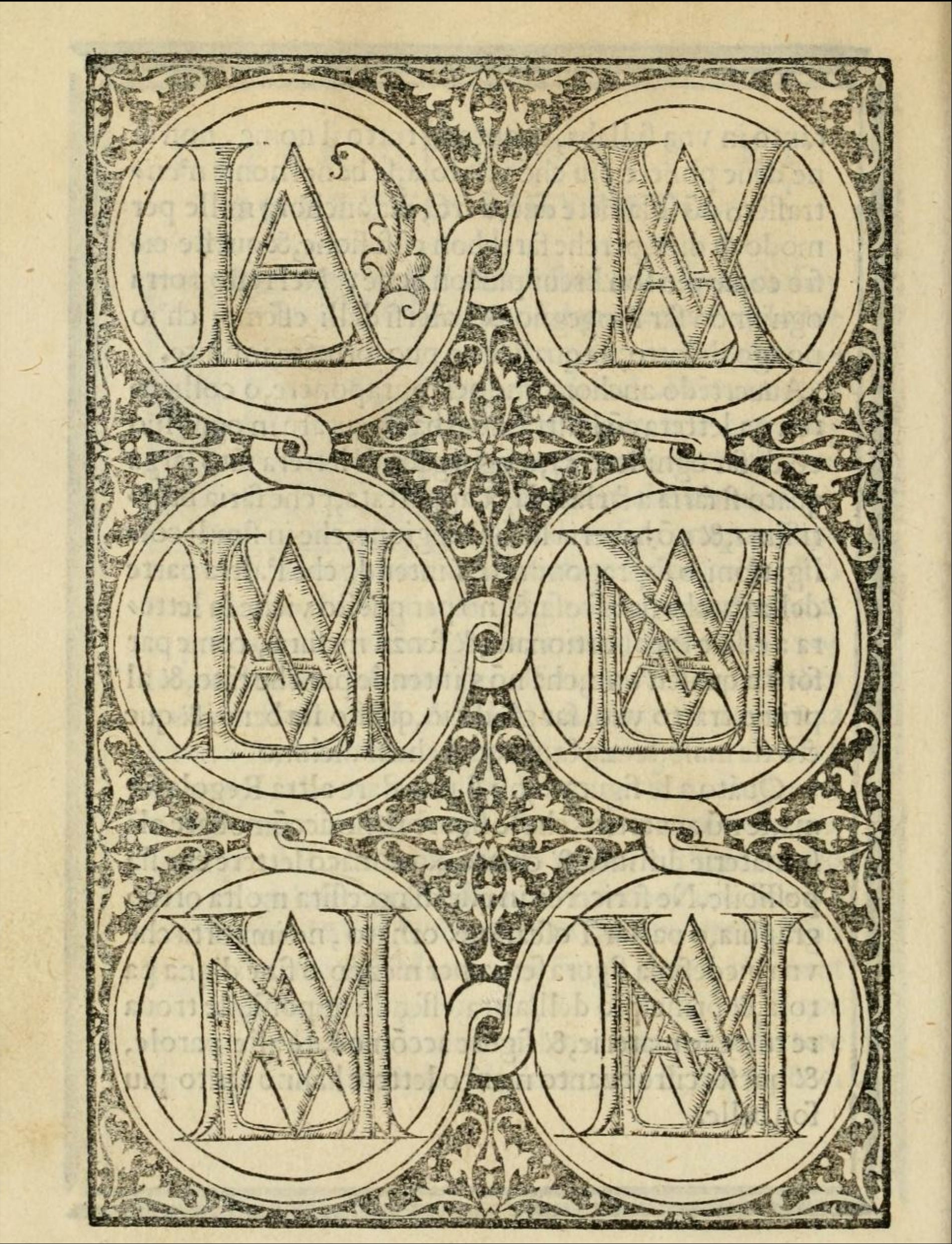
And in the 16th century such complex cyphers were becoming increasingly fashionable, as can be seen in Giovanni Battista Palatino’s 1545 detailed book on the mechanics of their creation, where he outlines a step-by-step approach for constructing the elaborate cypher for the name of “LAVINIA”.
On Sofonisba’s carefully constructed MFA miniature there is something very much like this on the shield or disc that she is prominently holding: an elaborately constructed faux-relief collection of golden letters all linked together. What could that be referring to, exactly?
A clue, of sorts, can be found in the Latin text that runs around the outer circumference: “SOPHONISBA ANGVSSOLA VIRGO IPSIVS MANV EX SPECVLO DEPICTA CREMONAE” – By the maiden Sophonisba Anguissola, depicted from the mirror, in her own hand, in Cremona.
In the spirit of so many of her early self-portraits, then, Sofonisba is proudly announcing her artistic presence to the world – a message that we know was consistently promulgated by her father, Amilcare, who regularly sent copies of her work as gifts to people of influence in order to successfully establish his daughter’s reputation.
Which, finally, explains Sofonisba’s carefully constructed cypher that accompanies her proud declaration of her artistic abilities (both through the inscription and – even more significantly – the miniature itself), spelling out, as it does, the name of her father, AMILCARE – an expression of filial devotion that she surely would have believed was plainly visible for the intended recipient of the portrait. Below is a short video extract from our new film, Sofonisba’s Chess Game, where the individual letters of “AMILCARE” are highlighted in sequence.
It’s a beautiful, very moving, message that anyone who takes the trouble to carefully study this spectacular self-portrait will be deeply touched by.
So it’s hardly a surprise that Michael Cole, after lovingly dedicating his book to his daughter, Alice, at the conclusion of his Acknowledgments, places his own similarly-designed cypher of her name on the otherwise blank final page of his book, giving her the last word, as it were.
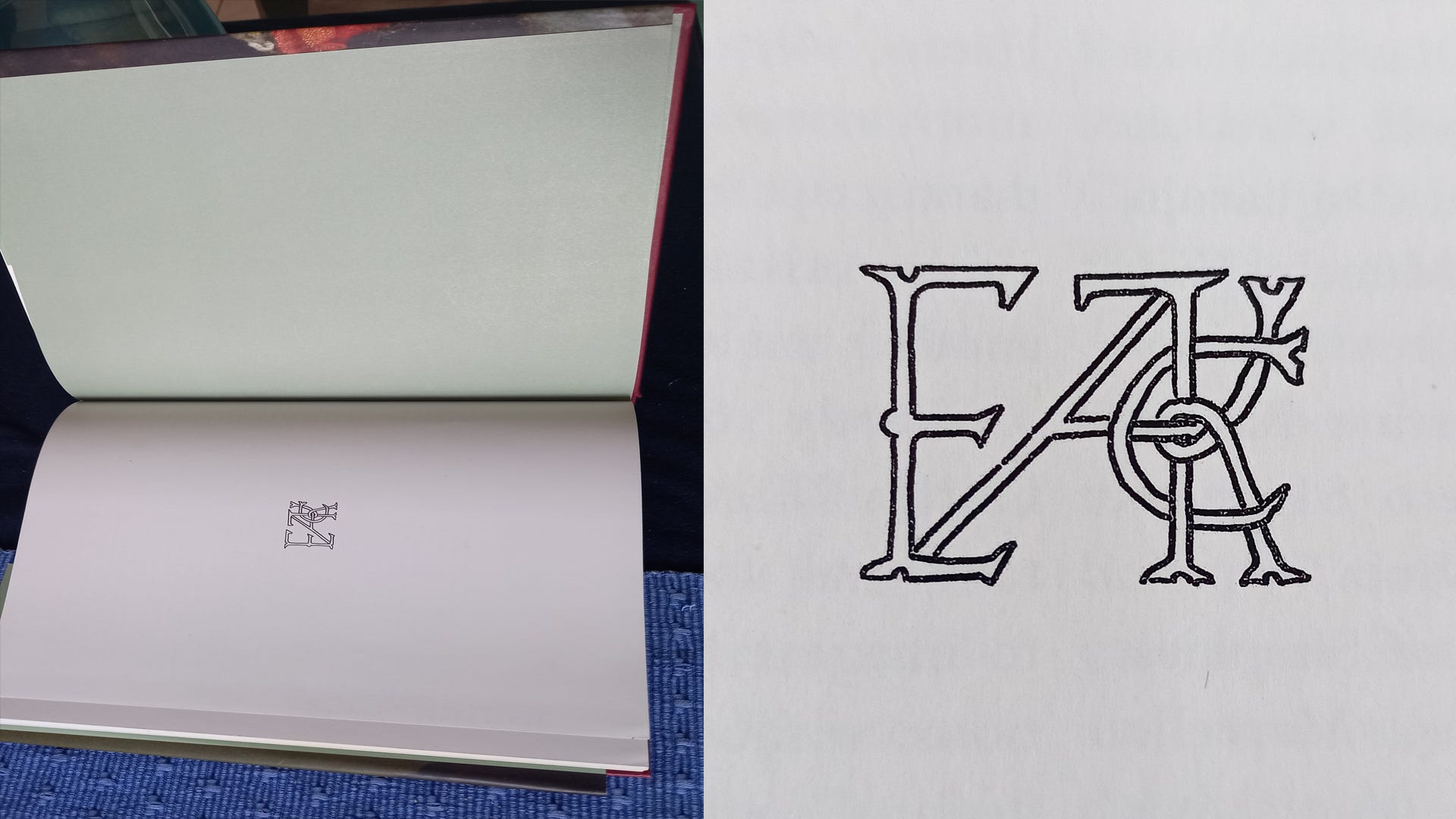
It’s difficult to imagine a better example of the power of art than that.
Howard Burton
Below is the trailer of Ideas Roadshow’s new film, Sofonisba’s Chess Game.
Shown in the previous post, Sofonisba’s Style.
Which you should really buy, by the way, if you’re the slightest bit interested in Sofonisba – no Amazon affiliate fees for me or anything like that, just a wholehearted recommendation to support wonderfully comprehensive scholarship.
Not entirely beyond the realm of possibility, it should be mentioned, given that the great Renaissance polymath Leon Battista Alberti (1404–1472) was the pioneer of a disc to inscribe one of the first polyalphabetic codes called “The Alberti cipher disk” – see here.
There is also the reasonably common supplementary meaning of “cipher” as “a person of no importance” – faceless, interchangeable administrative cogs in a larger administrative machine – which is likely etymologically linked to its Arabic and Old French roots as the word for “zero”.
If anyone can offer me a coherent explanation of the exact difference between a monogram and a cipher, by the way, please do drop me a line directly or in the comments.
It's such a good self-portrait..She's observed her expression, her gentleness and humour. She seems very modern.