

Overlooked Treasures
The subtle architecture of grief

One of the many challenges of art history is taking into account the often distorting effect of history itself – identifying the many sedimented meanings that have gradually accreted upon a work of art after centuries of detailed analysis, culminating in a range of present day associations that might well have seemed distinctly alien to its original creator and patrons.
In last week’s post on Donatello’s famous statue of David1 I explored one such example, where a statue which, to Quattrocento Florentines, straightforwardly represented the purity and power of their republic triumphing over adversity, has somehow over time become near-universally regarded as a paean to homoeroticism.
In many cases, like Donatello’s David, the contemporary end point of such interpretational trajectories are impossible to predict: a seemingly random consequence of changing societal values, academic fashion, the disproportional impact of particularly influential figures, and many more factors besides, resulting in art history’s own intriguing version of “the butterfly effect”.
Of course there must have been occasions when it was abundantly clear to the artists that the projects they were working on would one day be associated with substantially different meanings from those originally intended, such as rapidly commissioned statues publicly depicting the magnificence of powerful rulers which likely wouldn’t last beyond the next successful insurrection of one of their many enemies.2
And then there are times when artists did their utmost to take legacy matters into their own hands: explicitly crafting a detailed image for posterity that may or may not have had anything to do with the actual facts on the ground.
In the opening tale of Giovanni Boccaccio’s Decameron, we encounter a wicked little notary from Prato called Ciappelletto who spends his life wantonly cheating, murdering and fornicating. At the end of his life, however, he manages to convince a credulous friar of his holiness to the extent that the friar buries him in his monastery, where he quickly becomes venerated as a saint.
Jan de Jong, art historian at the University of Groningen, repeatedly invokes the story of Ciappelletto throughout his captivating book on Roman tomb monuments3 to pointedly illustrate the often significant disparity between reputation and reality that lies at the heart of these often elaborate structures.
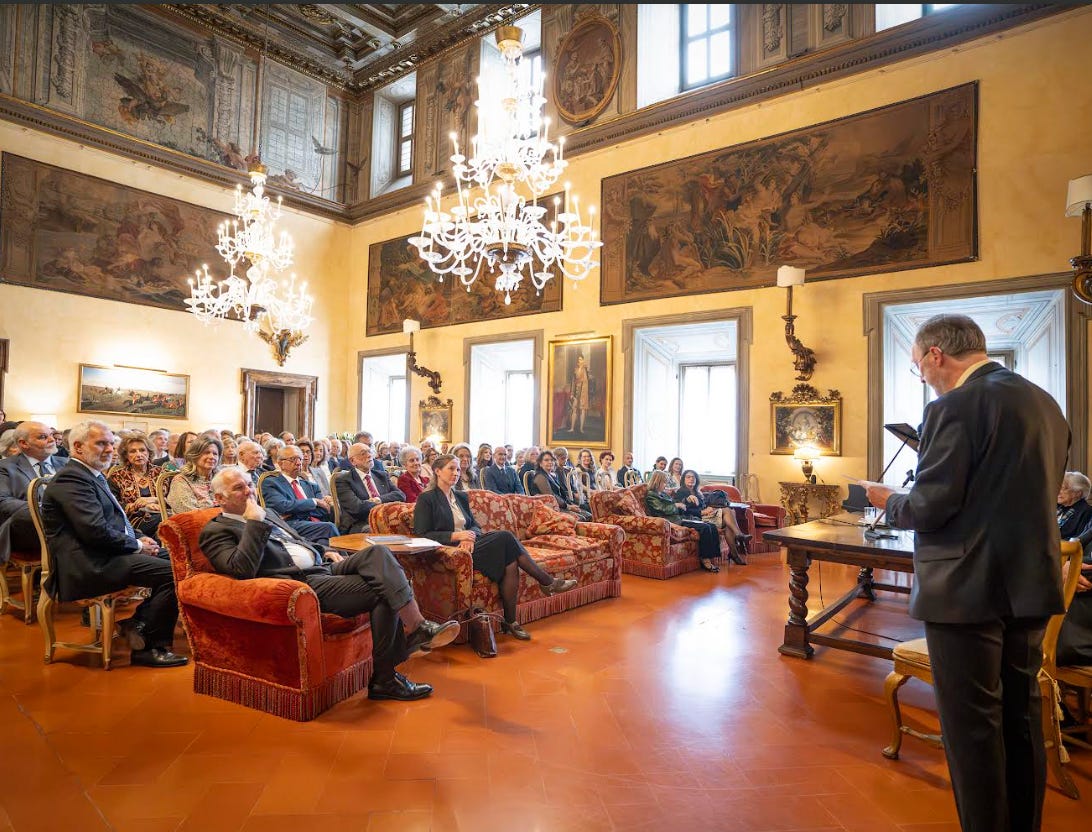
Tomb monuments have long captured the attention of art historians through their sculptural particulars, but by focusing on the revealing combination of text and image and examining monuments of women, couples and children along with the more established examples of popes and cardinals, Jan offers a much more intimate and moving glimpse of 15th and 16th-century Roman society than normally obtained through a detached examination of architectural details, one brimming with many instances of quietly profound artistic understanding.
Perhaps my favourite example of his unique treatment is this tomb monument for Alfonsina de’ Medici Orsini.
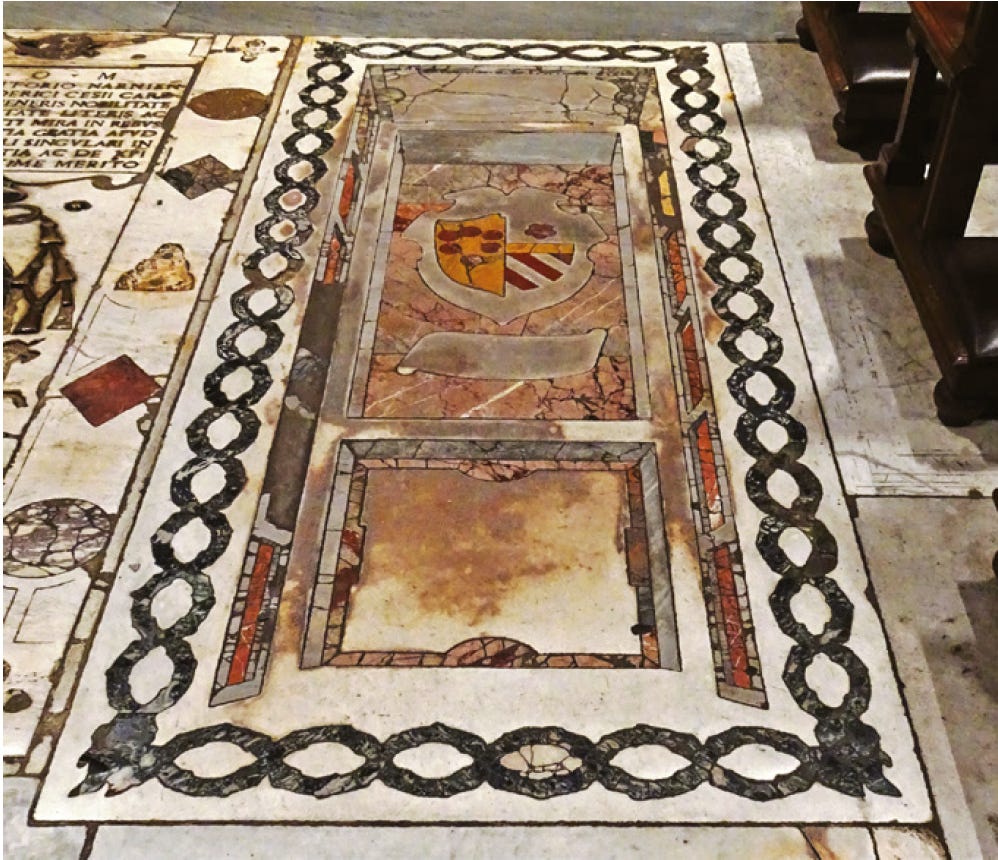
Located in the middle of the nave of Santa Maria del Popolo – famous for its Bramante-designed apse, spectacular stained glass windows by Guillaume de Marcillat, Raphael-designed (and Bernini-finished) Chigi Chapel, paintings by Caravaggio and Annibale Carracci and much, much more – this quietly arresting monument was erected by Alfonsina’s daughter, Clarice.
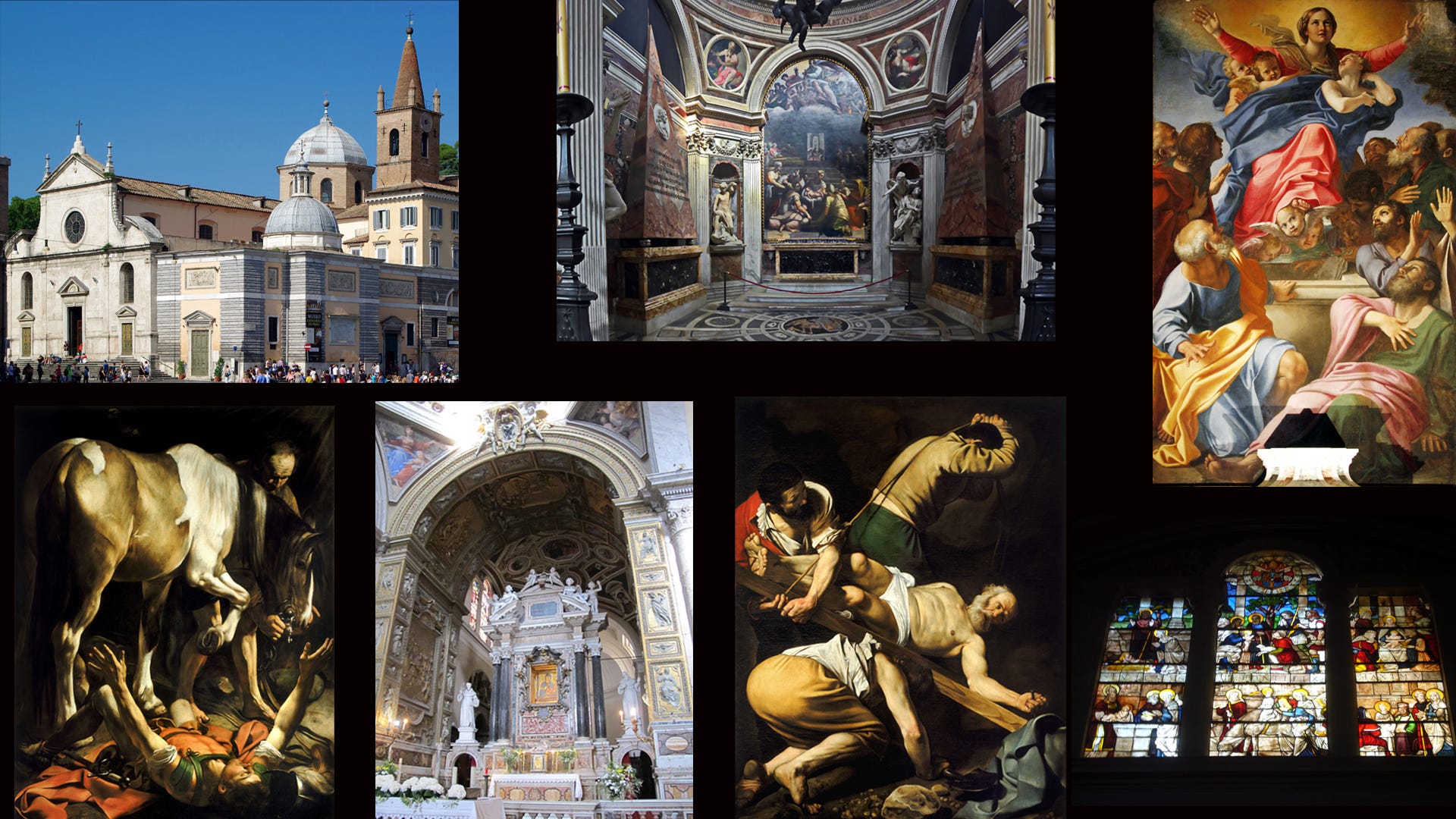
Unlike standard tomb monuments that prominently intrude into space,
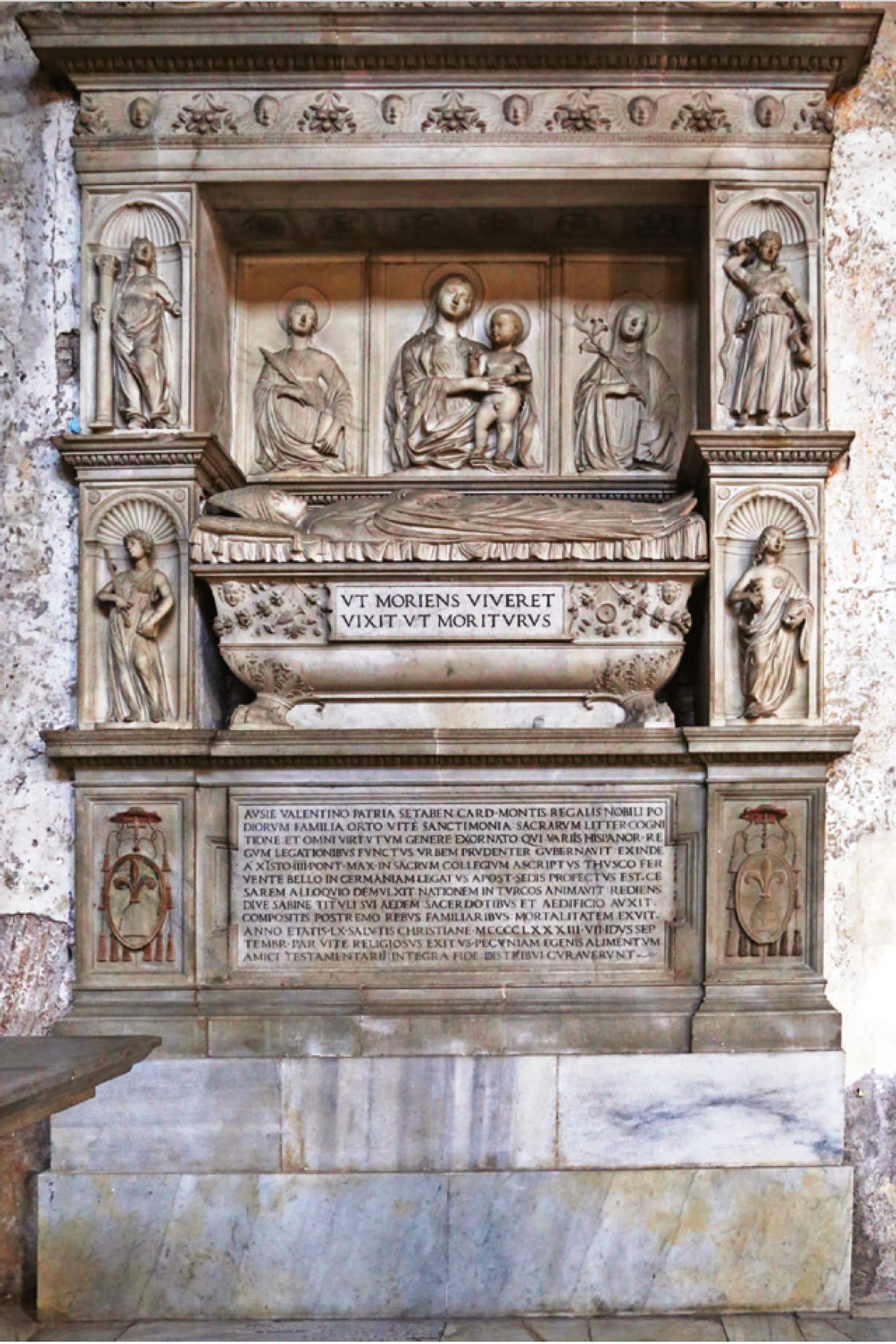
this one takes the viewer emphatically in the other direction, inventively directing our attention downwards to where Alfonsina’s body is buried, while its accompanying Latin inscription4 movingly detailing Clarice’s grief:
In exchange for the gift of your milk and for so many labours,
Alfonsina, your grateful daughter furnishes this tomb for you:
Your daughter who wishes to be confined with you under this block of marble,
And who calls Lachesis hard and fate cruel.
You dwell in the Elysian fields with your son and husband,
I am left alone in human misfortune.
But I will not be given a long delay.
If Clotho will refuse to cut the sad thread, my grief will cut it.
This powerful elegy, replete with classical illusions and unusually bereft of any standard Christian references to death and the afterlife, offers a vastly more genuinely emotional experience than the majority of standard invocations typically inscribed in its more grandiose counterparts.
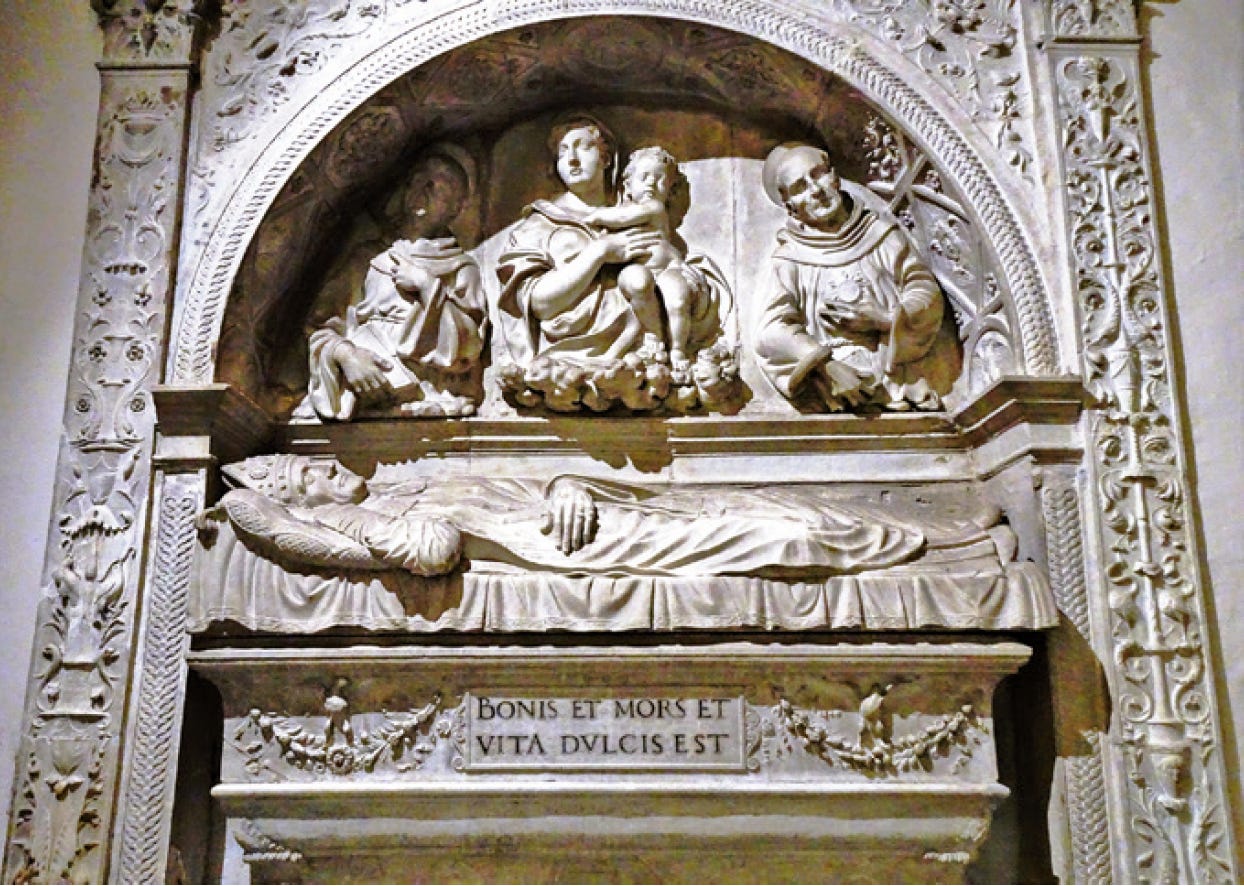
Meanwhile, Clarice’s words are additionally reinforced by the monuments’ unique architecture.
To read those lines describing how she wishes to be confined with her mother, Jan notes, the viewer has to stand at the foot of the incrusted marble slab, where they’ll be presented with the illusion of looking into an open vault:
“Combining this illusionistic depiction with Clarice’s complaint in elegiac couplets, they will ‘see’ poetry and picture in the right perspective, realizing that they are looking at the space reserved in Alfonsina’s crypt, where Clarice desires ‘to be confined with her mother under a block of marble’.”
Not too many people, I’m guessing, pay much attention to Alfonsina de’ Medici Orsini’s tomb monument as they busily make their way through Santa Maria del Popolo to check out the many vastly more famous artworks scattered throughout the basilica.
Which is yet another instance of how history can subtly distort our historical understanding: sometimes, we simply forget.
Look around. Great art could be right under your feet.
Howard Burton
You may also be interested in reading the following essays:


Even if the artist in question was someone like Michelangelo, who famously created an oversized bronze statue of Pope Julius II in Bologna that was summarily toppled and destroyed a few years later when opposing forces reconquered the city.
Tombs in Early Modern Rome (1400–1600): Monuments of Mourning, Memory and Meditation, Brill, 2023 – winner of the 2026 Daria Borghese Prize.
Well-documented, but no longer legible.