
A Curious Conversion
How the ancient Sibyls became Christian

In my previous post, Syncretic Brilliance, on the famous mosaic floor of Siena’s cathedral, I casually mentioned, while citing the many stunning marble mosaics created over the centuries, that there were no less than ten separate images of ancient Sibyls on either aisle of the central nave.
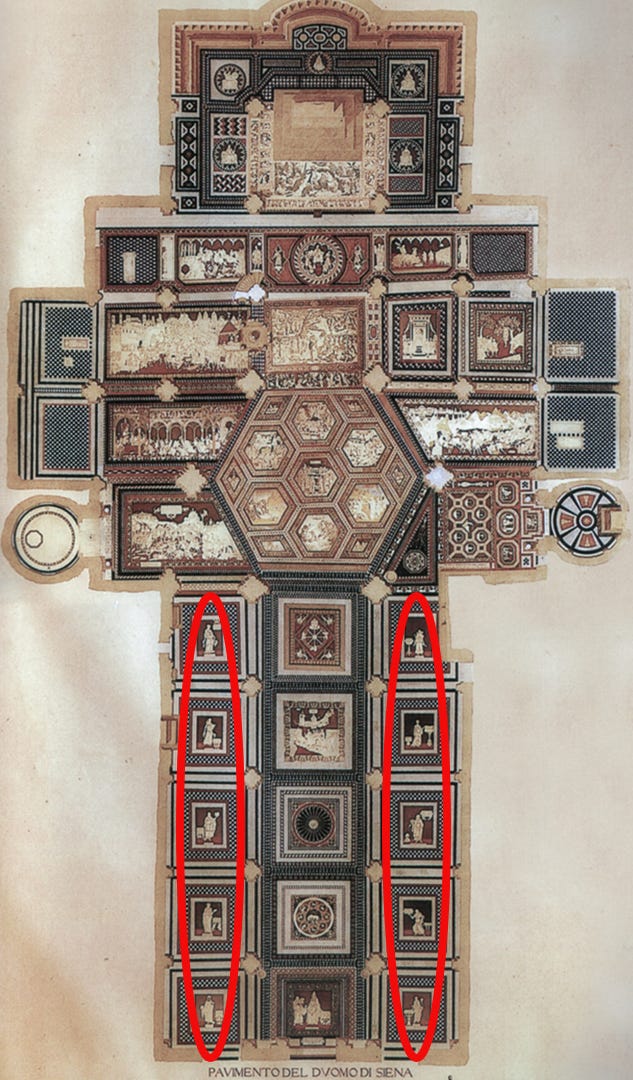
Which is, when you stop and think about it, pretty strange. Why should a Christian church – and a particularly celebrated and influential one at that – have so many prominently placed pagan prophets within it?
The answer turns out to shed valuable light on the cultural orientation of medieval and Renaissance Italy.
First, though, a bit of background.
The Sibyls, female oracles who prophesied at holy sites, had long been an established feature of ancient Greek life. At first there seemed to be only one of them (Heraclitus is the first known Greek writer to have mentioned them, referring simply to “the Sibyl”), but over time they’d gradually increased to 7 or so, through a combination of repeated folkloric practices or deliberate literary invention (such as through Euripides, who created the Libyan Sibyl for his play Lamia), each associated with her specific location, usually somewhere in Asia Minor (modern-day Turkey, more or less).
By the time the celebrated Roman polymath Marcus Terentius Varro wrote about the Sibyls in the first century BC, their number had increased to ten (Persian, Libyan, Delphian, Cimmerian, Erythraean, Samian, Cumaean, Hellespontine, Phrygian and Tiburtine), with several having migrated to Italy – such as the Cumaean Sibyl, who’d famously offered to sell 9 of her prophetic books to Tarquin, a Roman king from the days before the republic.1
When Tarquin refused her offer, citing too high a price, she burned three of the books and re-offered the remaining six at the same price. This, too, he refused; but when she burned another three, he finally capitulated and bought the remaining three for the original price. These were later placed in a sacred vault beneath the Capitoline temple of Jupiter, and were consulted by the Roman Senate during national crises, until their destruction during the Roman fire of 83 BC.
Virgil made explicit mention of the Sibyls in both his Aeneid and Eclogue, but it was the fourth-century author Lactantius (240-320 AD) who was the first to explicitly fuse the ancient Greek and Roman tales of Sibyls with an avowedly Christian framework.
Lactantius, an advisor to Constantine I, explicitly wrote his influential Institutiones Divinae as an attempt to convert the Roman elite to the newly-sanctioned religion of Christianity, which they’d long scorned as a product of the lower, uneducated classes.
Penned in a highly-cultivated elevated Latin style (Lactantius was sometimes referred to as “the modern Cicero”), Institutiones Divinae is not only our source for Varro’s aforementioned ten Sibyls and the famous story of the Cumaean Sibyl’s books, it also emphatically averred that Christianity was the natural culmination of the Sibyls’ prophecies – a sentiment that quickly gained purchase among subsequent Christian authors, such as Eusebius of Caesarea, St Basil the Great and, most famously of all, St Augustine, who asserted that both the Sibyls and the poetry of Virgil implicitly foretold the coming of Christ.2
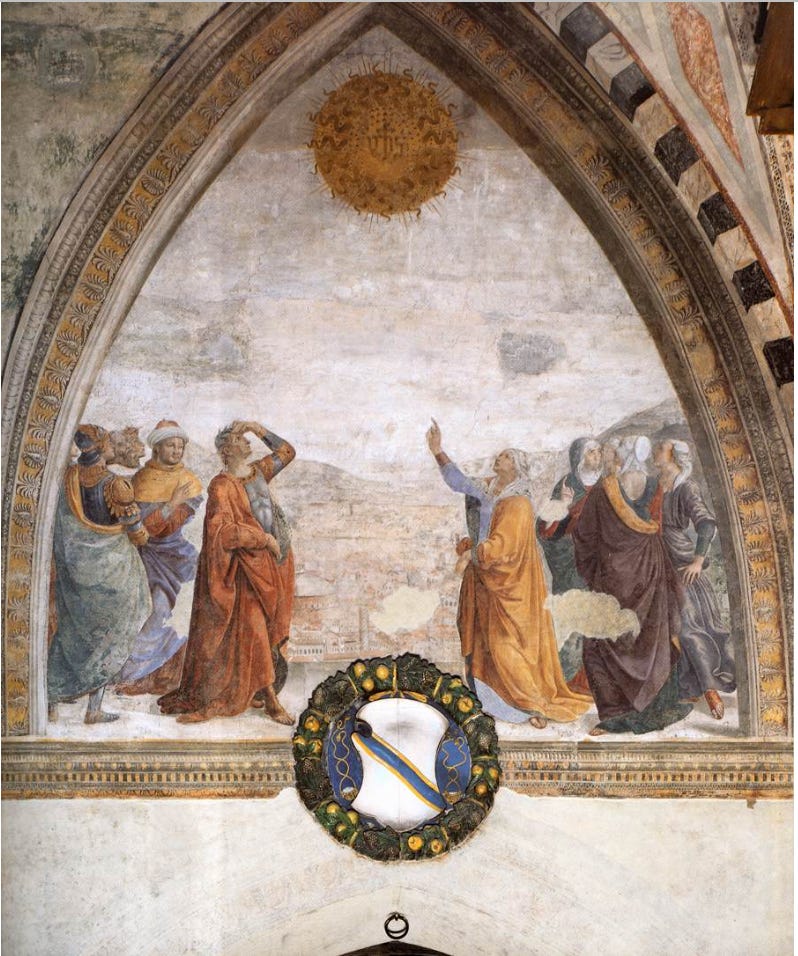
800 years later, Jacques Voragine’s hugely influential Golden Legend embedded the Sibyls even more firmly within Christian lore, with its section on the Nativity embellished with a tale of the Tiburtine Sibyl informing Augustus of the imminent arrival of a far greater power than even he could imagine.
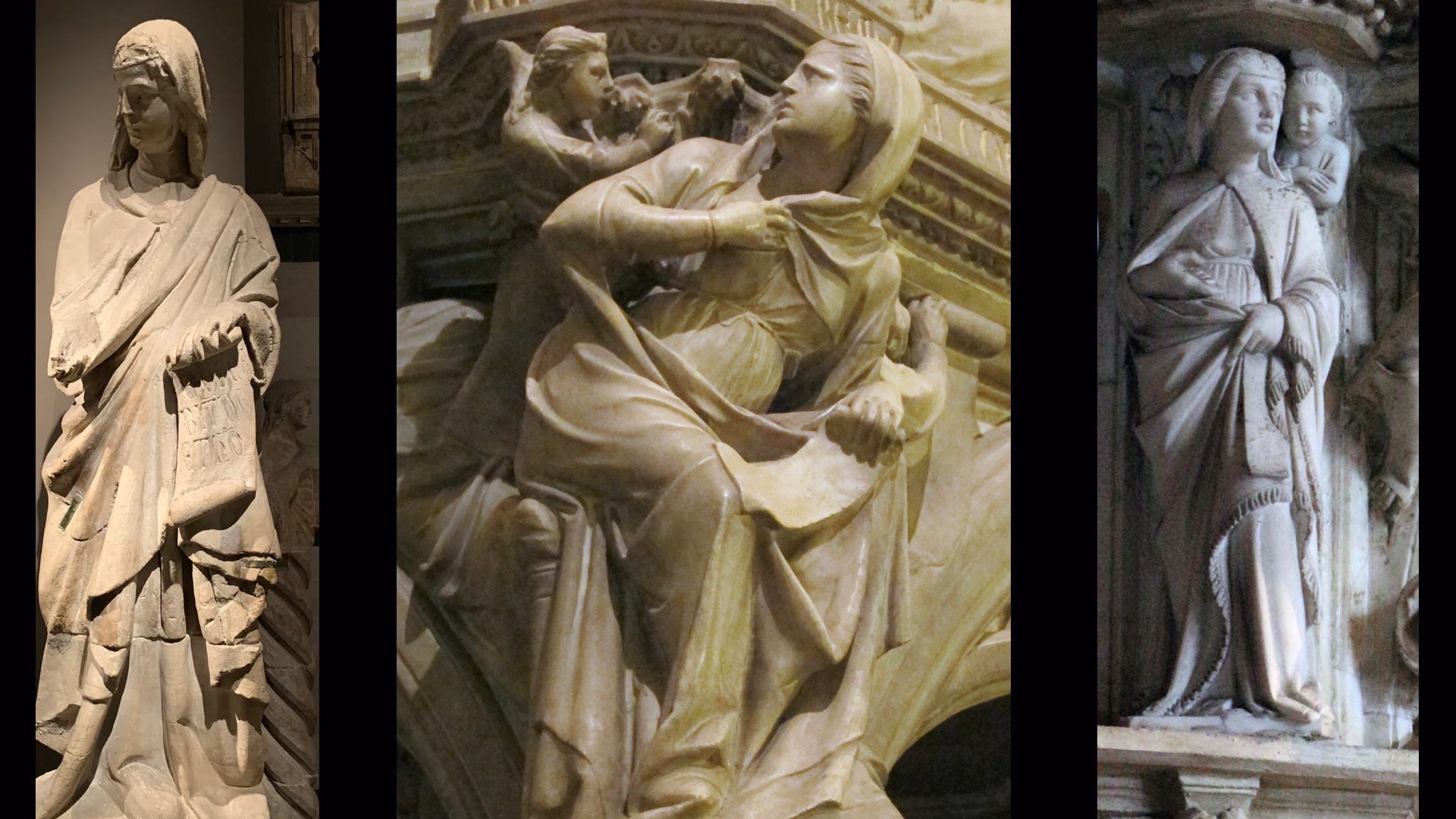
The first notable artistic depictions of Sibyls also began to appear during this time, led by Giovanni Pisano’s sculptures of Sibyls in Siena, Pistoia and Pisa,
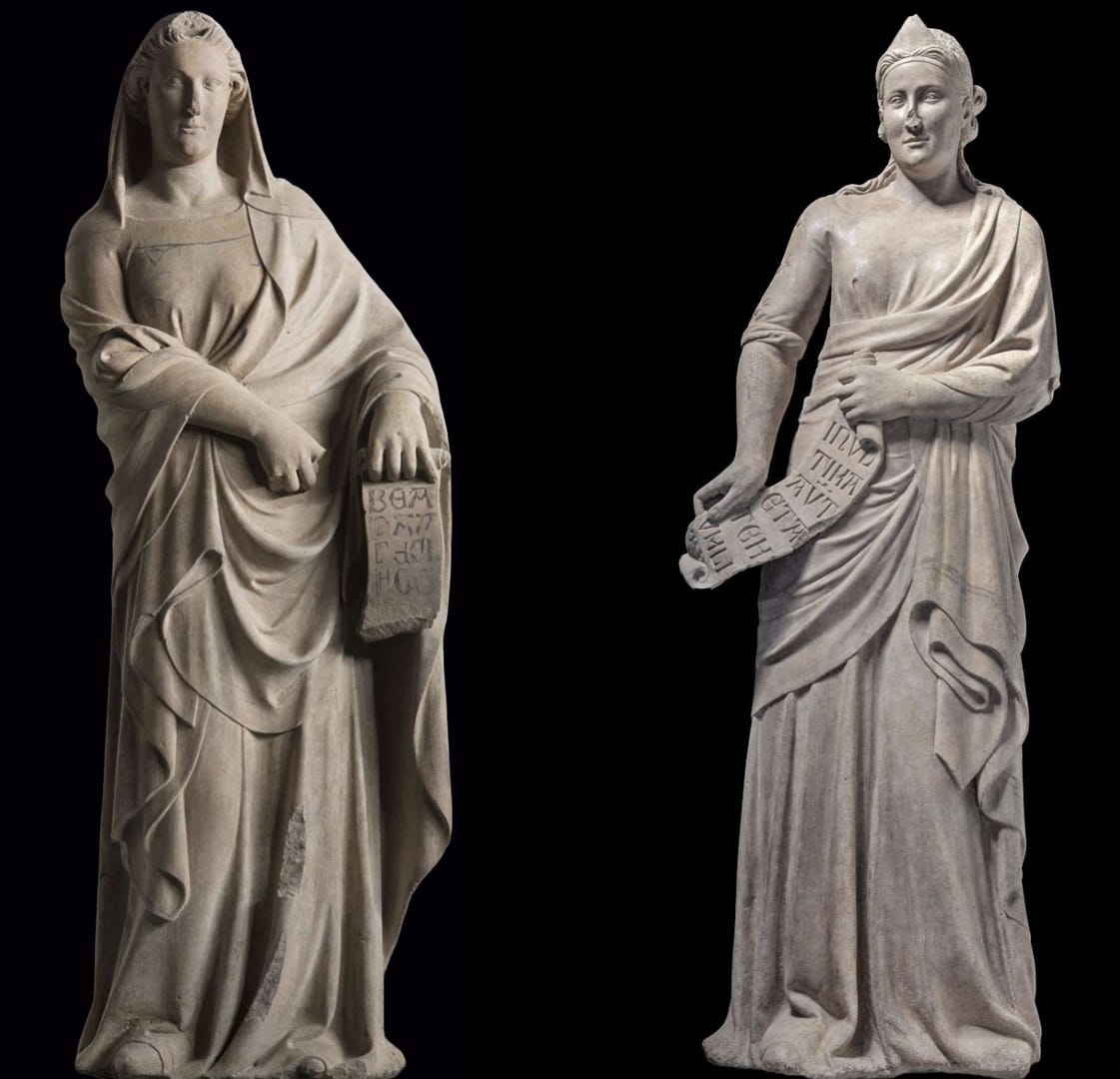
which were followed a few decades later by the sculptures on the Florence campanile, attributed to Andrea Pisano and his son Nino, that might well have been designed by the tower’s architect, Giotto.
But it was not until the 15th century, when the explicitly classicizing literary movement known as humanism came into full swing, that we saw a veritable explosion of artistic depictions of Sibyls.
One of the first Sibyl paintings we know of is an early 15th-century fresco by an unknown artist in the mountain town of Cortina (yes, that Cortina, co-host town of the recently concluded 2026 Olympic Winter Games) featuring five crowned Sibyls carrying scrolls.
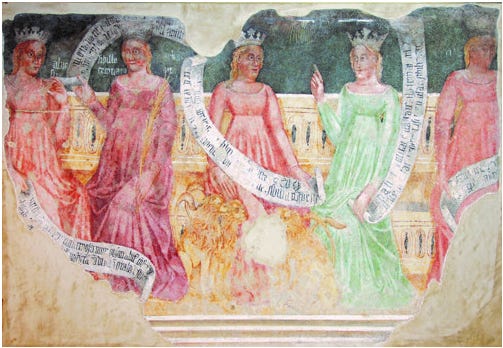
By the second part of the 15th century, however, almost every great artist of the day was trying his hand at representing Sibyls, from Baccio Baldini,
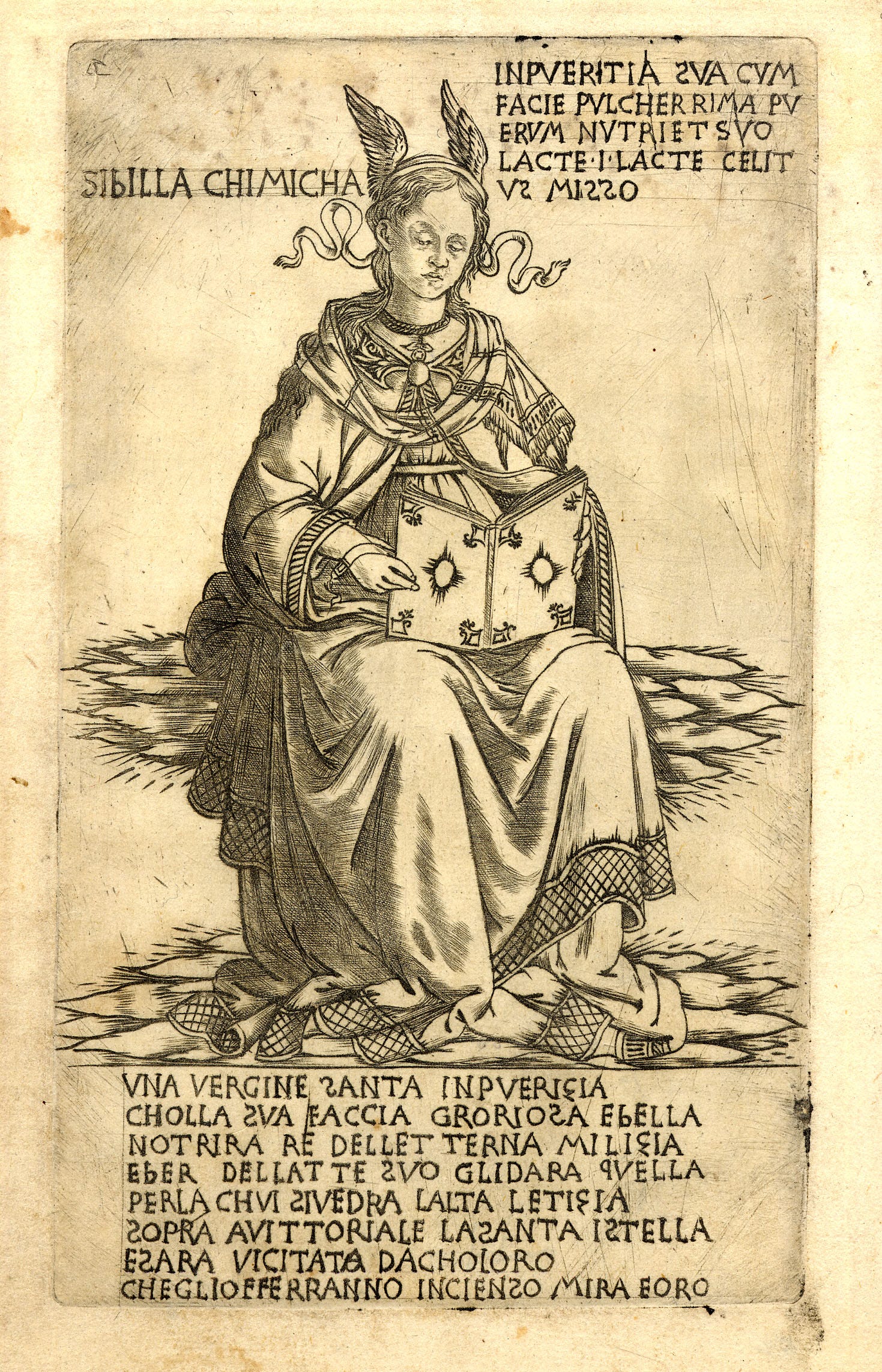
to Botticelli and Filippino Lippi,
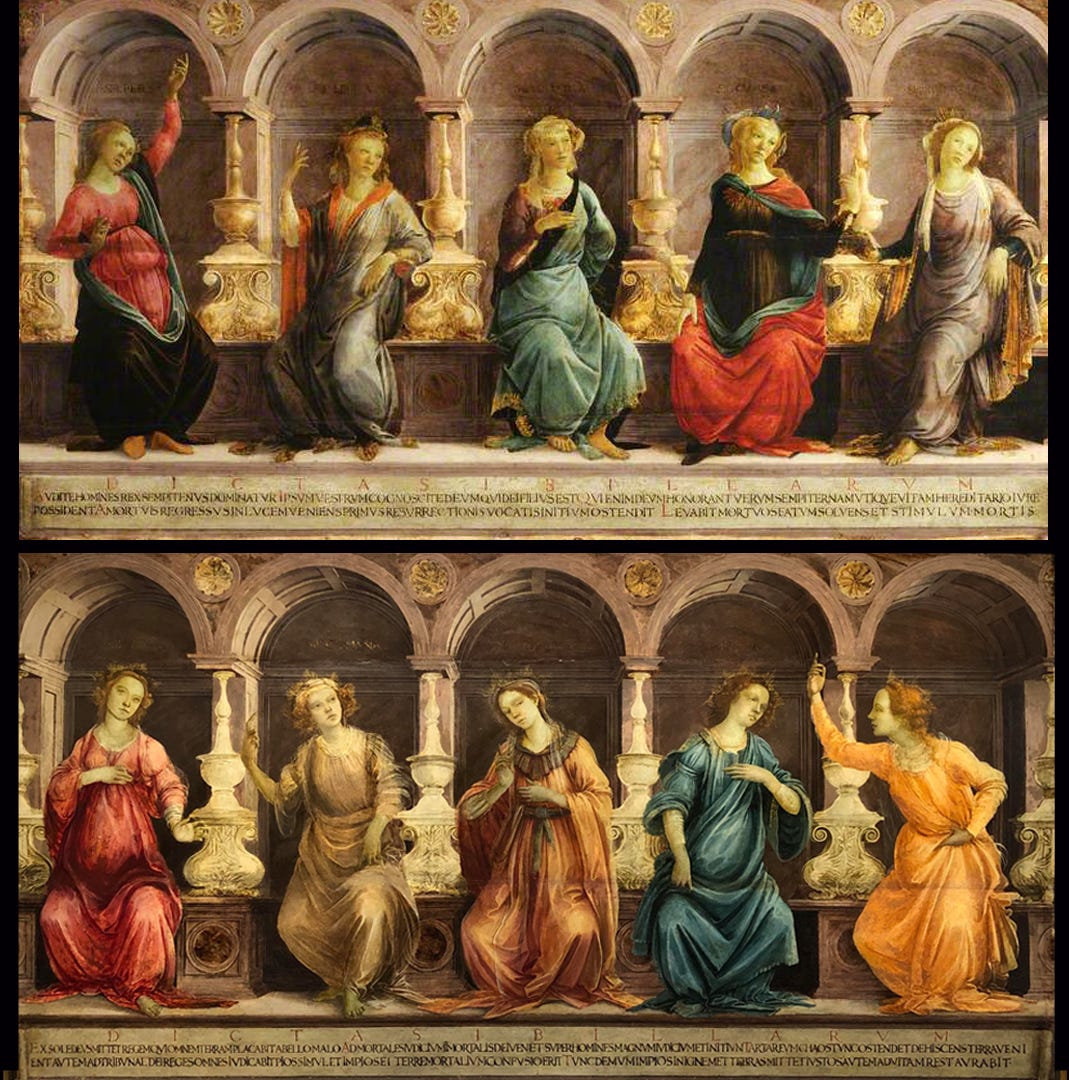
to Pinturicchio,
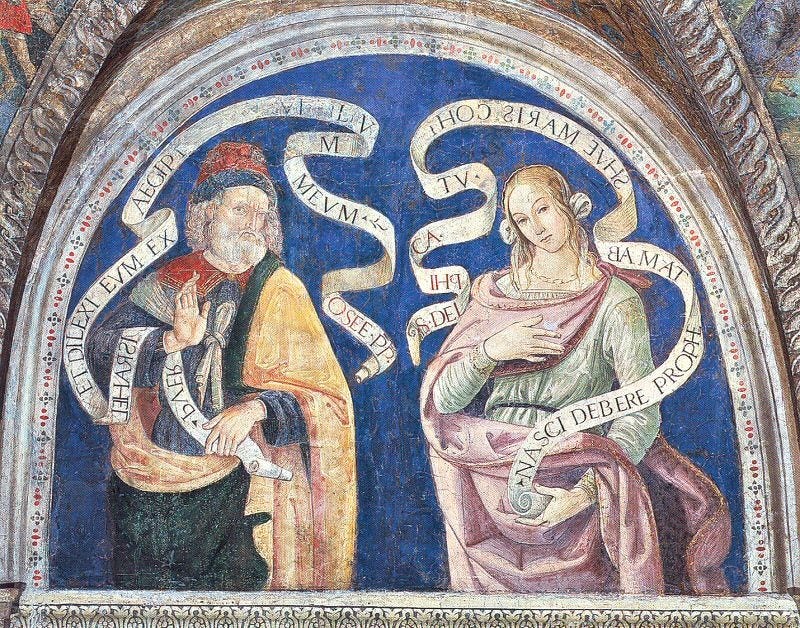
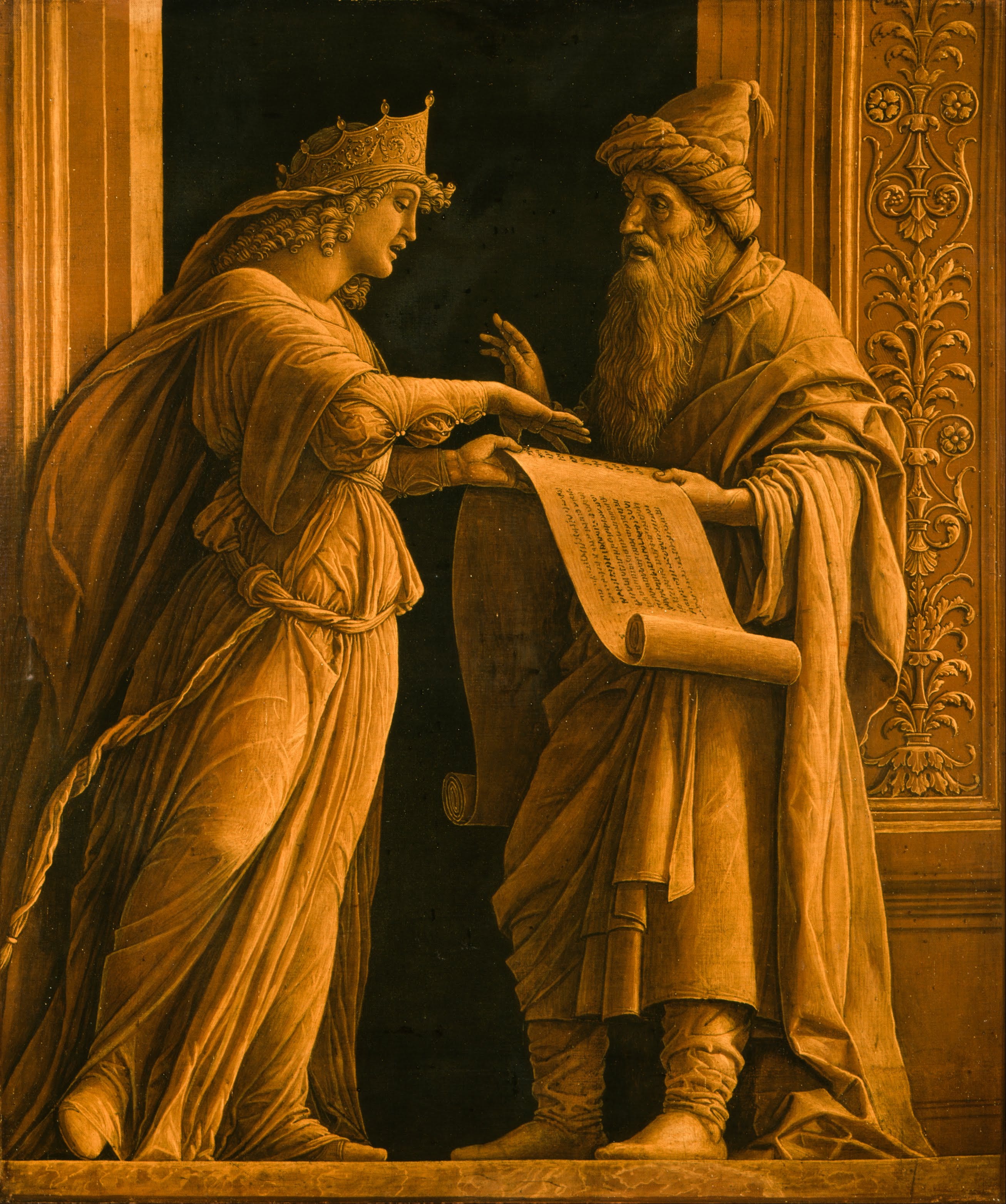
to Mantegna,
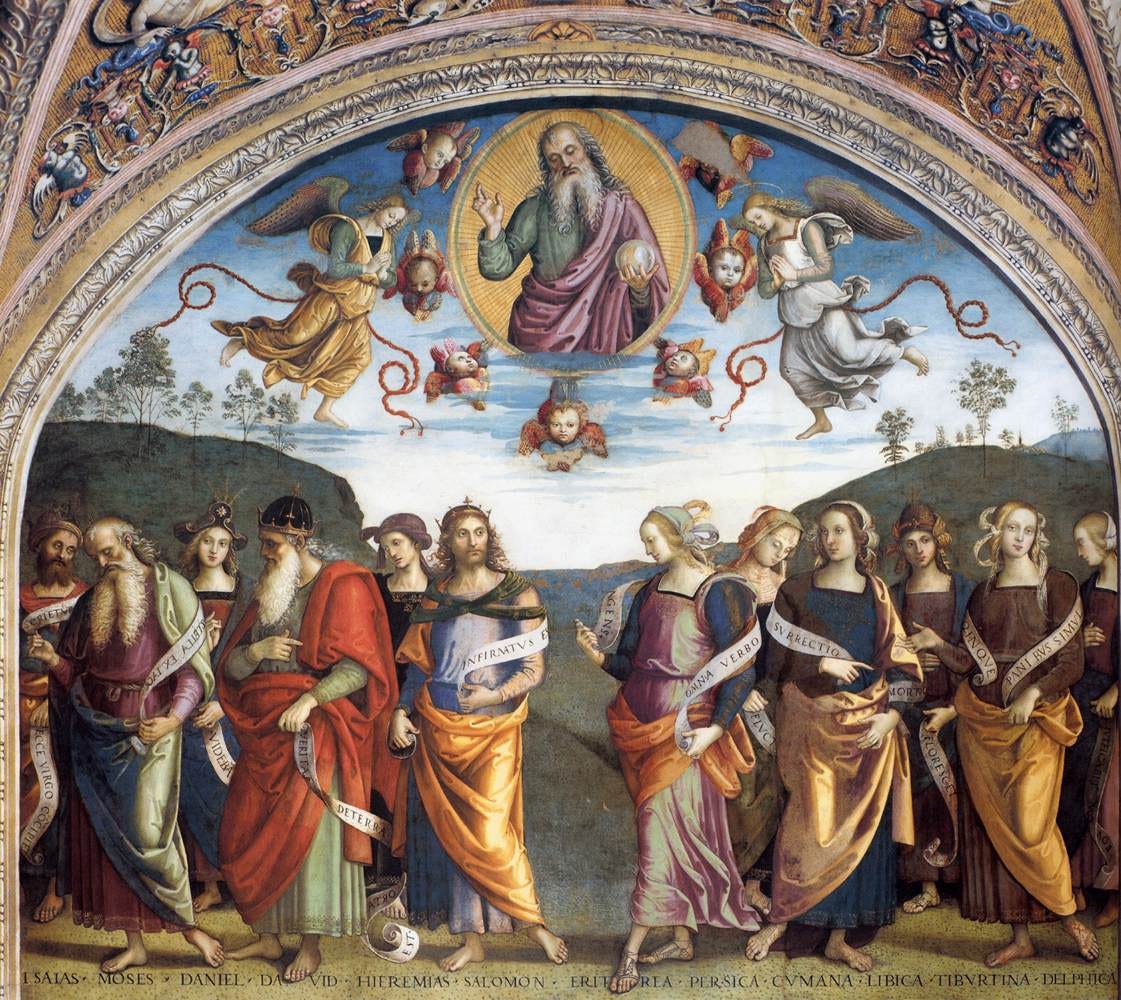
to Perugino,
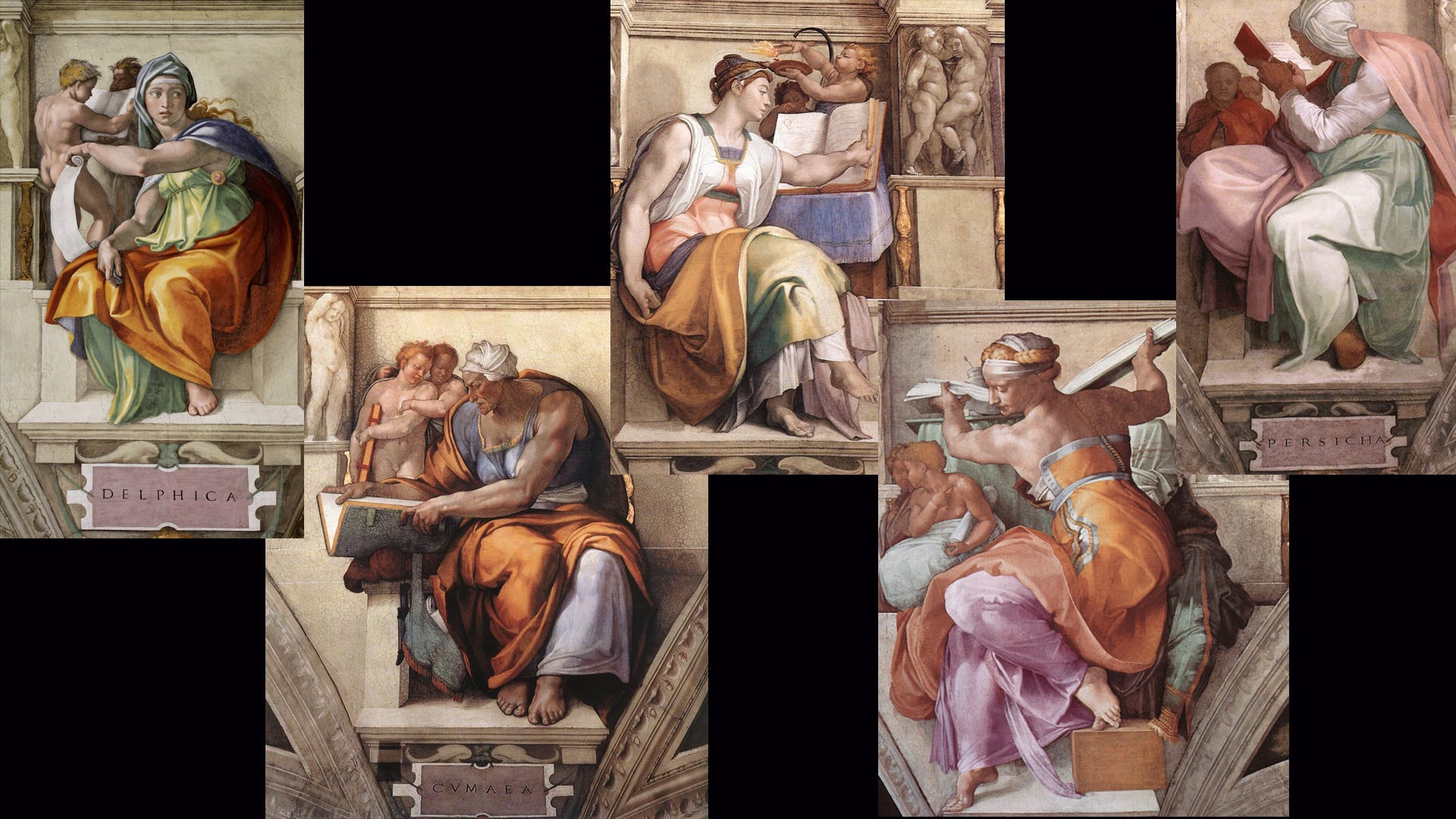
to – most famously of all – the five Sibyls on Michelangelo’s Sistine Chapel ceiling,
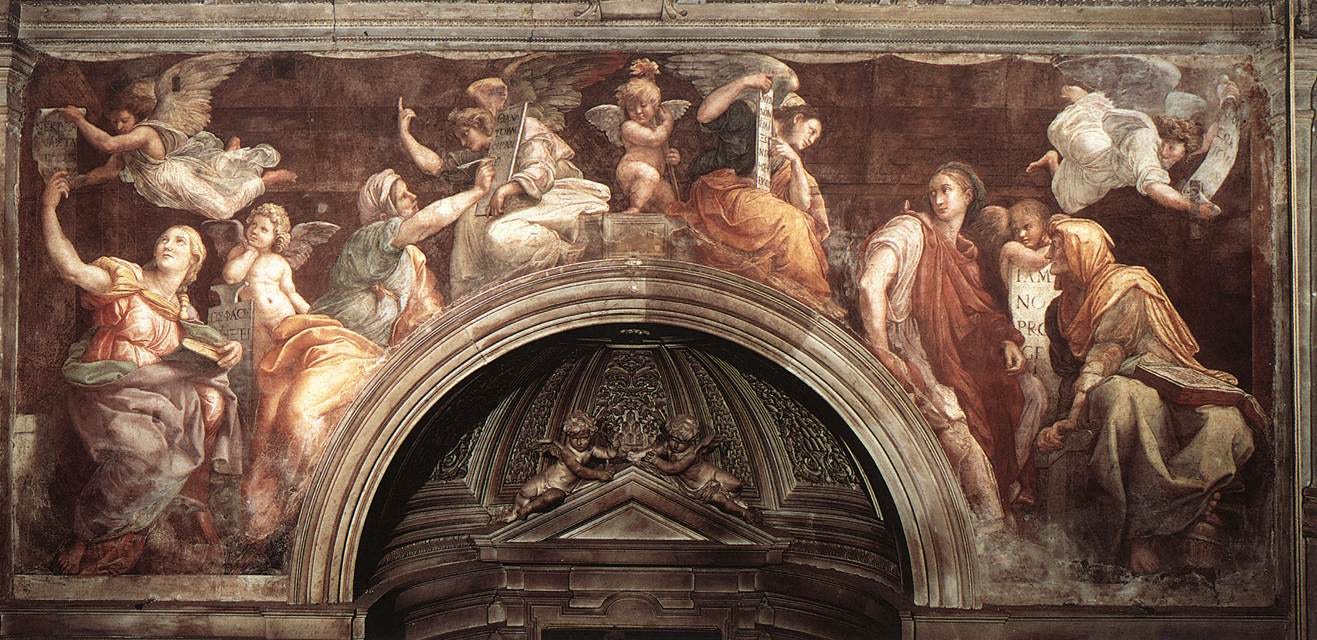
and the four in Rome’s Santa Maria della Pace by Raphael.
Perhaps the most compelling Renaissance Sibyl series of all, however, is the one found in the supercharged marble floor of the Siena Cathedral, where all ten of Varro’s Sibyls cited by Lactantius’ Institutiones Divinae are prominently placed on either side of the central nave, bracketing five other magnificent classicizing images, including two of the most enchanting artistic paeans to the philosophical values of Renaissance humanism ever constructed.
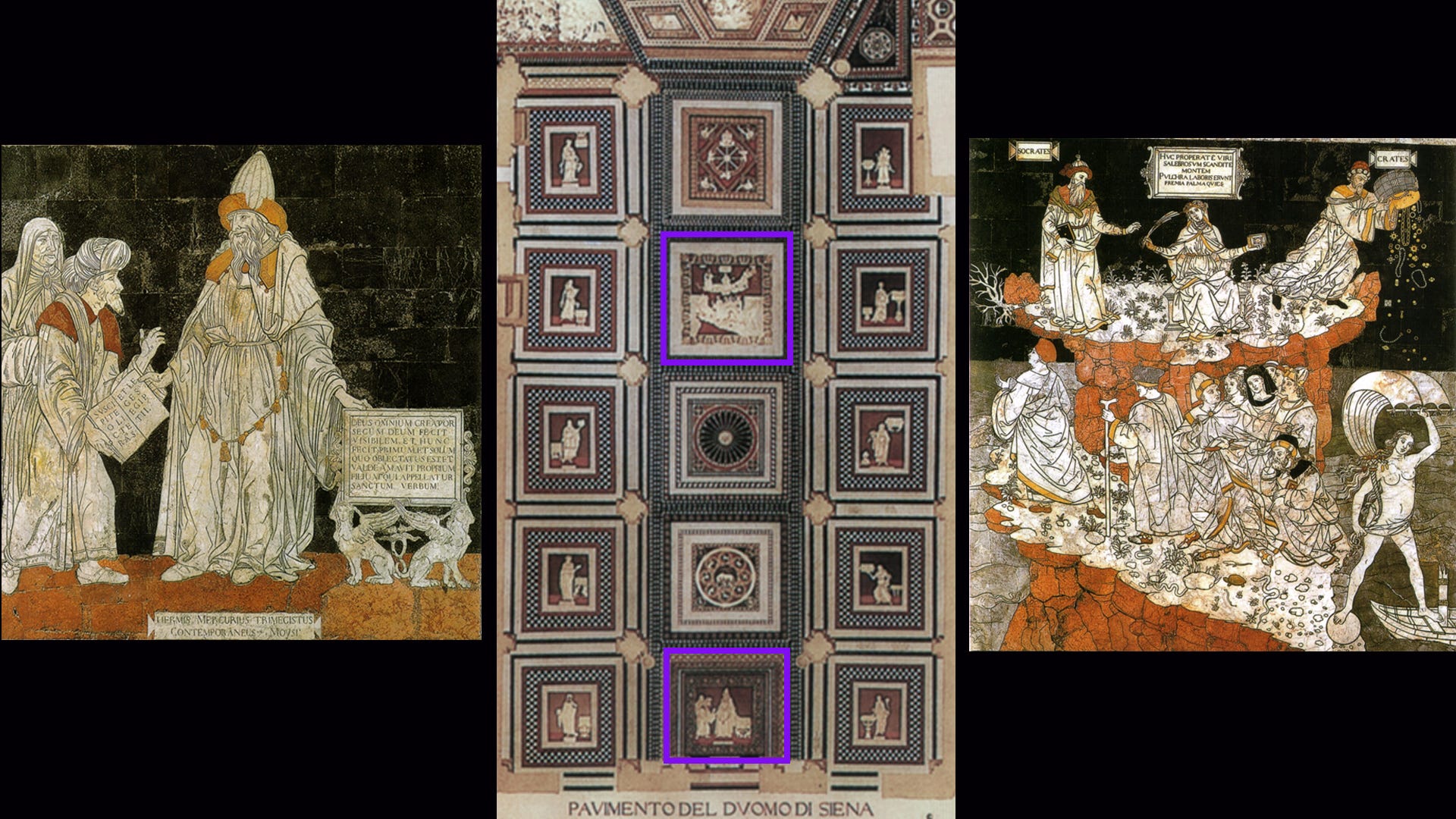
But that’s part of next week’s story.
Howard Burton
We’re currently producing a detailed video on the mosaics of Siena cathedral’s pavimento as part of our Art In Focus series on our new Exploring Art History YouTube channel, where we’ll soon be releasing weekly video podcasts with accomplished art historians and other art experts as well. Subscribe now to receive updates!
You might also be interested in reading the following essays:


There is some ambiguity about which particular Tarquin he was referring to, with some claiming it was the fifth king Tarquinius Priscus and others the seventh and last king Tarquin the Proud – hence the common practice of simply calling him "Tarquin".
St Jerome is not to be counted amongst these early Christian authors, given his notorious love-hate relationship with classical pagan texts prompted by his "second conversion" when Christ appeared to him in a dream and told him that he was more "Ciceronian" than "Christian".